
Audio reading of this section (English)
Around 1020-620 SA (by our calendar) or approximately 1600-1200 BCE, the Cassiberios (Únětice) culture gave way to the Dumiatis (“they of the mounds” – in academia, the Tumulus) culture. The word tumulus, more often known as a (round) burial mound, describes the methodology in which these people interred their dead. Spirits of mounds feature in the folklore of the mediaeval and early modern era. The Aisson Dumiation (age of the Dumiatîs, or Tumulus culture) being one source – though not the only – of these mounds.
An example of the garb worn by women of the time period. [Wikimedia Commons]
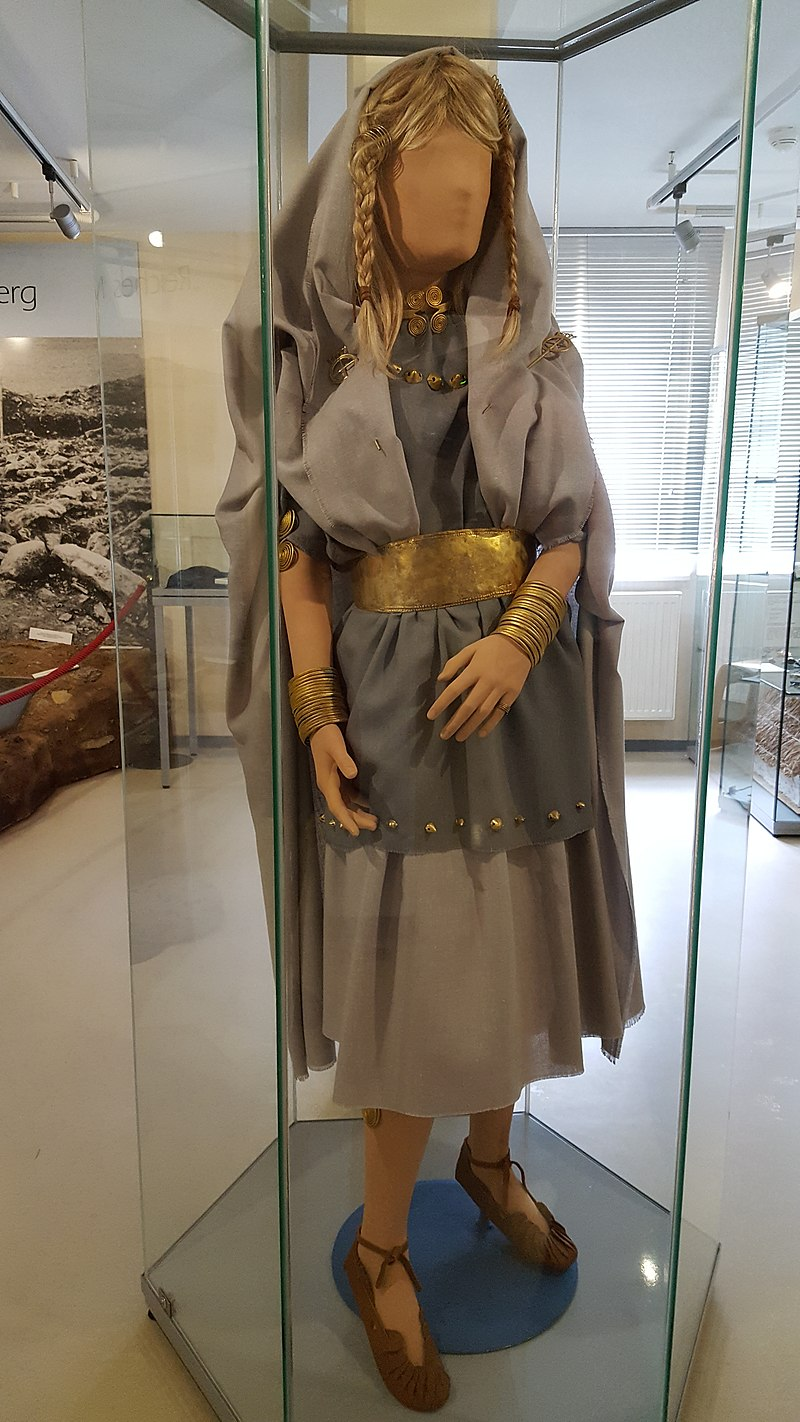
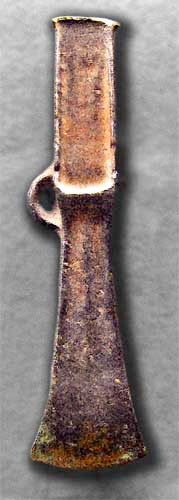
Of material interest, we see the Bronze Age in full swing. The material being used for weaponry, yes (such as the palstave axes, and the flange hilted swords from the era), but also for many bracelets and brooch pins symbolic of this age. Vast Eurasian trade networks emerged to account for and disperse the components of bronze across the continents. International trade certainly is not solely the provenance of modernity. The next age will manifest itself archaeologically from a difference in burial style from these ancestors.
A palstave style axe from the European Bronze Age. [Wikimedia Commons]
More reading on the Dumiatis (Tumulus) culture:
- Moving metals IV: Swords, metal sources and trade networks in Bronze Age Europe, by Johan Ling, Eva Hjärthner-Holdar, Lena Grandin, Zofia Stos-Gale, Kristian Kristiansen, Anne Lene Melheim, Gilberto Artioli, Ivana Angelini, Rüdiger Krause, and Caterina Canovaro
- The Oxford Illustrated Prehistory of Europe, by Barry Cunliffe (more general but a good introduction)
Continue to Chapter Two, Part Six: Ulumagos (Urnfield) Culture
 Bessus Nouiogalation