
Audio reading of this section (English)
The social structure of the Senogalatîs was like others, rich and complex. There aren’t as many sources that dive too deeply into all of its complexities and so not as much is as recorded as we would like, but there are some. As usual, the matter revolves around attempting to parse fact from fiction, as well as bias or ignorance (accidental or intentional) from the secondary accounts. Another important thing to remember is that of course, there were variations among the different nations. It is fair to say that like many Indo-European societies, that of the Senogalatîs had an ordered hierarchy. However, it isn’t so simple as something like a corporate “chain of command” and it would be unwise to attempt to compare them to a contemporary understanding of such structures. More important than notions of hierarchy are the ties of obligation that the different strata of society had to one another. The opportunity to hoard wealth simply wasn’t present. Doing so would tear apart the fabric of society (much as it is today). The fundamental foundation of the social structure of the Senogalatîs is that of the ueniâ. That is, of the family and household. Be aware though that we aren’t talking about household in the same way it is thought of today: the atomised “nuclear family” sharing one dwelling. No, it encompasses several families bound by family lines plus clients and fosterages. The importance of mutual obligation is clear here. In exchange for the loyalty, assistance, and labours of the clients, the client is to be protected by the main family in the household (who is generally of warrior stock), as well as to receive wealth redistribution in the form of gifts and other benefits. In the kind of material conditions and social climes of the time, such is the system they devised.
As the population boomed during the emergence of the Senogalatîs, this meant that a lot of effort had to be invested into maintaining the loyalty of clients. If the leading family was stingy or cruel, this could lead to the clients seeking another household to serve. This kind of system of clientage extended not only to families and households, but entire nations. A whole nation could do the same as a family could. There would be in Senogaliâ some nations that would attract other nations as clients. Stronger nations like the Aruernoi (Arverni), Aiduoi (Aedui), Secuanoi (Sequanni), Remoi (Remi), and Eluuetioi (Helvetii) are fine examples of this. Each had other smaller nations that rendered service to them in exchange for protection and wealth distribution. Such a system allowed for a degree of flexibility and choice. It was also somewhat volatile because in theory, a client could change sides and some must have as during the Roman invasion. The Remoi, for example, took clients that did not want to align with the rising Aiduoi. It is also marked in the fall of formerly powerful nations like the Bituriges (heirs of Ambicatus) who ended up becoming a client nation themselves as their power and prestige presumably declined.
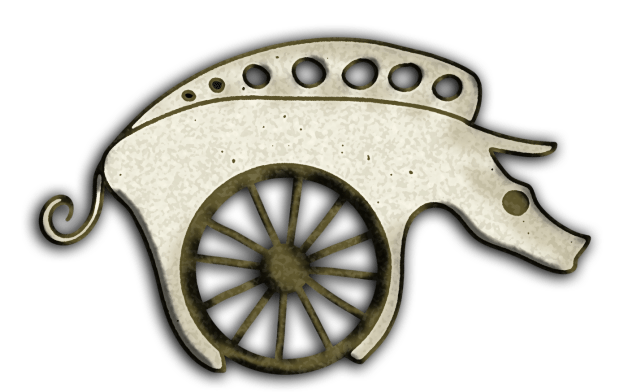
Most people were farmers. This isn’t likely a surprise. Unless one’s first reading of the Senogalatîs was what they learned from Asterix! Hunting was a rarity and one usually reserved for the warrior class. The Senogalatîs were mainly farmers and they were quite good at it. So much so that they invented one of the best harvesters in the ancient world. Their skill at farming is what led to the great population boom that fuelled their age of expansion. They were so good at it that the population grew even beyond their capacity. Unfortunately, like most ancient cultures, there was also slavery. Slaves were usually people captured in battle or raids. It was possible to earn freedom and thus resettle in the society, but it is of course never a justifiable institution. Another widespread group were those with specialized skills. Smiths, potters, carpenters, artists, and the like. Merchants could also be included in this group. These were the people that created much of the works that survived long enough for archaeologists to discover them. Without them, we’d have only secondhand accounts of the Senogalatîs. Their skills were much coveted and it wasn’t uncommon for them to travel around taking on offers of payment from other towns and nations. This is how specific styles and trends emerged in the arts of the time.
The warrior classes were the epotes (knights, cavalrymen) and the cingetes (soldiers, infantry). It is among these classes that most sources talk about. Much of which was already related in the section on battle. These were of course the people who carried out most combat, though common free people were expected to contribute in major situations when it came to defence of the home front. Otherwise, it was these groups who carried out battles in raids against other nations. This kept their skills sharp and gave them opportunities to gain glory that the bardoi (bards) may sing about. They often belonged to corioi (warbands), each having their own leadership and rituals. It was often they who offered protection to migratory groups and it was they who were enlisted as mercenaries. The latter had the effect of not only bringing back wealth to the nation, but new goods and ideas. As dirty as their work was, they were a vital part of the economic structure of the time. This holds true for many societies back then. Leadership in Senogalaticos nations tended to be headed by a Rix (roughly translated to “king”). This role was a heavily sacred one. They were generally chosen by a council, as opposed to the hereditary kingship of the Middle Ages. In this rix was entrusted with the order and well being of the toutâ (people, nation). Poor rulership was thought to bring catastrophe and so a bad ruler could be punished, even killed if their rule brought hardship and suffering. The rix also governed with the aid of advisors, who could give the rix counsel on ruling matters.
Some, like the Aiduoi (Aedui), governed a bit differently. A rix was appointed for a term not to exceed one year, and no one from his family was allowed to take this position for as long as the rix lived. This was presumably put into place to prevent nepotism. There was also the position of the uergobreð (uergobrets) meaning something like “the one who works judgement”. Judging by the title (no pun intended), that of a supreme judge in the arbitration of disputes and administration of justice. These roles appear to be chosen by assemblies, we don’t know how open these were but we do know that those interested in leadership courted the support of as many people as possible. One example that will dovetail quite nicely into the next group we’ll discuss is in the words of Athenaeus’ ‘Deipnosophists’ (4.37) and looking at the mention of Louernios, son of Bituis:
“And Posidonius continuing, and relating the riches of Lyernius the father of Bityis… says that ‘he, aiming at becoming a leader of the populace, used to drive in a chariot over the plains, and scatter gold and silver among the myriads of Celts who followed him; and that he enclosed a fenced space of twelve furlongs in length every way, square, in which he erected wine-presses, and filled them with expensive liquors; and that he prepared so vast a quantity of food that for very many days any one who chose was at liberty to go and enjoy what was there prepared, being waited on without interruption or cessation. And once, when he had issued beforehand invitations to a banquet some poet from some barbarian nation came too late and met him on the way, and sung a hymn in which he extolled his magnificence, and bewailed his own misfortune in having come too late: and Lyernius was pleased with his ode, and called for a bag of gold, and threw it to him as he was running by the side of his chariot; and that he picked it up, and then went on singing, saying that his very footprints upon the earth over which he drove produced benefits to men.’ These now are the accounts of the Celts given by Posidonius in the third and in the twentieth books of his History.”
Athenaeus’ ‘Deipnosophists’ 4.37
Louernios made painstaking efforts to court the support of the people to secure leadership. This type of generosity was necessary if one wanted to be a leader of the Senogalatîs. Great gifts and great promises. As was mentioned before, we will use this same quote to talk about one of the esteemed and honoured kinds of people in the world of the Senogalatîs: the bardoi. Those with an eye for etymology may notice that the word bardoi, the singular bardos, is quite close to the word bard. Sometimes those conclusions can be misleading, but in this case it is quite accurate. The bardoi were indeed known for their musical prowess, but they weren’t simply musicians. The Senogalatîs had those as well, but not everyone who picked up an instrument or sang was a bardos. The bardos was a lorekeeper, a poet, a musician, and held sacred responsibilities all in one. They could create great praises or crushing satires on the spot. Such skills undoubtedly required years of intensive training and was most likely a skill passed down in apprenticeships. Bardoi in turn were normally in the employ of rulers and leaders of corioi (warbands). It was here that alongside praises and satires, they functioned as genealogists and recordkeepers. As such, among other things they had to be astute students of history. We can see here that the bardoi fulfilled a diverse array of functions. That isn’t to take away from the greatness of musicians. But it demonstrates that the role of the bardos was more complicated and intricately involved in the knowledge of traditional, history, and culture while being able to communicate these things in songs that were committed deeply in not only their own memory, but that of an entire people.
Another storied group of people that has to an extent captured the imagination is that of the uatîs. Singular: uatis, they too observed roles that stretched the limits of that aforementioned popular imagination. They are among the least understood of the trifecta of special classes: Bardoi, Uatîs, and Druides. The uatis is commonly interpreted as a seer. This much is true, but there is more to it than that. The uatis could divine messages in the entrails of sacrifice, the flashes of lightning in a storm, the flight patterns of birds, and many other means. In being able to do so, a uatis would have to have been well learned in disciplines of the natural world. A uatis would have known physiology, meteorology, and would have had to know the correct ways to perform the actions they did. Uatîs were guardians of the ancient traditions behind sacrifice and the mysteries of the natural world. They were not simply fortune tellers, but those who possessed great knowledge and understanding of the world around them. This would have taken many years to master. Their skills may have as such extended into other areas that required great knowledge of the natural world, such as what we’d call herbalism. Being in such deep studies meant that they likely weren’t sitting around waiting for the next sacrifice, but were consistently honing their craft.
The next one hardly needs an introduction. For they are likely already at least known to the reader, the Druides. Singular: Druið (again the last letter making a “ts” sound). They have, since they were first written about, captured the imagination of ancient and contemporary minds alike. The Druides were such a special class that they were exempt from military service and taxes. The two mentioned before probably were as well, but we do not know for sure. The Druides would have known something of the mysteries of the world like the uatîs. However, what sets them apart is that they were first and foremost philosophers. They were people who delved into a world equally as mysterious as any, ethics and humanity. This is why they were trusted to preside over disputes and were judges in those matters. They also guided and arbitrated matters of religious observances. It was also within their power to level one of what was considered the most severe punishment: banishment from communal religious observances. Thus similar to what is thought of excommunication in theory, and exile or shunning in practice. The reason this was so severe is because without attending those observances, they were in essence not a part of the community. They were basically all alone in the world. This was of course reserved for exceptionally severe offenses. The Druides were also known for their study of the skies, especially astronomy. Because of this, it’s assumed that it was they who kept a record of time. The Druides were in essence scientists, philosophers, judges, spiritual leaders, and recordkeepers all in one. The intelligentsia of Senogalaticos society, an order for whom great privilege was given but also great trust and responsibility was placed. They were adverse to writing, believing it weakened the mind and so their knowledge was transferred orally and committed to memory. It was said to have taken around twenty years of study to be counted as a Druið. They also had their own assembly in the land of the Carnutes yearly.
The lot of women in the world of the Senogalatîs was by and large better and freer than their Mediterranean counterparts, as well as for many ages that followed the Iron Age. However, it was still a patriarchal society. It would be vain and pointless romanticism to claim otherwise. Caesar claims that a man had power of life and death over his wife. Though it is hard to imagine the wife’s family (in a society where kinship was hugely important) would allow for such mistreatment. While this isn’t different from the Roman pater familias, it is still of course not something desirable or good about our ancestors society – if true. Nor is it so that if the husband died under questionable circumstances that the wife would be interrogated and possibly tortured or killed by the husband’s family. This is again a claim from Caesar and another from which it is an odd condemnation for one from a society where this was far from unheard of. Regardless, it is undoubtedly an ugly mark on any society, be it Senogalaticos or not, if indeed this was the case. On the other side of the equation, many rights applied equally to women. A woman could inherit property, and upon marriage both spouses would contribute wealth to a shared account that would be inherited by the surviving spouse when one passed away. Women also had the right to choose their spouse. They also were not strangers to battle. Ammianus Marcellinus relates this in ‘Rerum Gestarum’ (15.12):
“…In fact, a whole band of foreigners will be unable to cope with one of them in a fight, if he call in his wife, stronger than he by far and with flashing eyes; least of all when she swells her neck and gnashes her teeth, and poising her huge white arms, proceeds to rain punches mingled with kicks, like shots discharged by the twisted cords of a catapult…”
Ammianus Marcellinus ‘Rerum Gestarum’ 15.12
The benâ Galaticâ (Gaulish woman) was mighty indeed! Another fine example of a mighty Senogalaticos woman is Onomaris, who, if remembered from the section on the Senogalatîs in the east, was a leader of her people on a great eastward migration: guiding, scouting, and fighting all the way. As such, the possibility remained open for women to assume roles of leadership. Although again, it was unfortunately uncommon. That struggle for equality is still far from realized.
It was also not at all uncommon for men to be involved with other men. This was a well known practice in the corioi (warbands). Diodorus Siculus relates this in his ‘Library of History’ (5.32):
“…Although their wives are comely, they have very little to do with them, but rage with lust, in outlandish fashion, for the embraces of males. It is their practice to sleep upon the ground on the skins of wild beasts and to tumble with a male lover on each side…”
Diodorus Siculus ‘Library of History’ 5.32
It was not considered an issue nor looked down upon as it was in neighboring cultures to be the passive partner either. While they certainly had a different understanding of human sexuality than Western culture today does, relations between men of that nature were generally not seen as a problem at all. The society of the Senogalatîs was complex and multifaceted. Far deeper than what was thought of as barbarism. The hope of explaining their society and how it worked is that we can see that all societies have more to them than simple observations convey.
A few fine sources for learning more about Senogalaticos (and Iron Age Celtic more generally) societies is:
- *butācos, *uossos, *geistlos, *ambaxtos: Celtic Socioeconomic Organisation in the European Iron Age by Raimund Karl
- Space, Architecture, and Identity in Gaul in the 2nd/1st centuries BC by Sabine Rieckhoff
- The Social Significance of Trade in Late Iron Age Europe by Greg Woolf
 Bessus Nouiogalation