Tegobessus VIII: Îuoi (Holidays)

Holidays are not merely moments of rest or recreation—they are sacred turnings in the spiral of time, where the cosmos opens just a little more clearly to us. We call these days of observance Îuoi, and they help us mark the changes in season, celestial shifts, agricultural patterns, and mythic moments of our tradition. While no single fixed liturgical calendar is required in your house custom, holidays provide an excellent framework for developing both group and house customs. These customs build continuity, deepen familial and spiritual bonds, and allow the development of a unique culturally rooted mythos.

Trinox Samoni: The Festival of Three Nights of Samonios

Trinox Samoni is the only holiday explicitly named in the Coligny Calendar, the lunar-solar-based calendar of the ancient Gauls. The name translates to “Three Nights of Samonios,” and on the Coligny Calendar falls on 17 Samonios, which would be the third quarter moon around the Summer Solstice. Because this is the only explicitly attested holiday by name, Trinox Samoni holds a central place in most Gaulish pagan customs, including BNG. That said, it is understood that many Galatîs will celebrate it in their own way, depending on house tradition, climate, and personal relationship with the spirits and gods. Remember diversity is not a weakness—it is a living testimony to the adaptable, local nature of ancient Gallic religion. In this sense, we are all celebrating Trinox Samoni together, even if it looks different from hearth to hearth. You can read more about Trinox Samoni HERE.

The Coligny Calendar: A Framework, Not a Requirement

The Coligny Calendar gives us a fascinating glimpse into how the Gauls may have seen sacred time—tracking lunar months, intercalary periods, and special notations for mat (good) or anmat (not good) days. However, you do not need to use the Coligny Calendar to practice Gaulish Paganism. It is complex, occasionally obscure, and likely varied regionally even in its own time.

That said, it can be a fun and meaningful tool for those who wish to align their practice with the historical rhythms of the Gauls. Using it can help cultivate a sense of cosmic rhythm, and it invites deeper reflection on how time and sacred observance intertwine. As you have gathered from our site, we in BNG use the Coligny Calendar to mark our days.

Creating House-Based Seasonal Mythology

In BNG, we deeply encourage the creation of household mythology and seasonal storytelling that lives along with the Bessus of BNG. This practice roots your home in sacred time and gives personal meaning to your observances. This isn’t about inventing deities (though you can honor lesser spirits or ancestors this way)—it’s about telling the story of the seasons through the values, land, and spirits that shape your household’s life.

Here are some ways to begin building your house custom:

  • Reflect on your local climate and ecology. When do the trees bloom? When do the birds leave or return? Let the land itself inform your spiritual rhythm.
  • Establish a mythic pattern: is your year shaped by a journey, a sacred marriage, a battle between light and dark, a weaving of the worlds?
  • Use local or ancestral figures. Perhaps an ancestral hero blesses the home each spring, or a house spirit brings the cold in winter only to be banished with warmth in the spring rites.
  • Mark solstices, equinoxes, or cross-quarters with rituals, feasts, and stories that evolve over time.

Over time, these stories can become ritualized, forming the backbone of your household observances. These do not replace the dêuoi or BNG festivals and holidays—but complement them, anchoring the divine into the specific soil of your life.

A Living Calendar for a Living Religion

In total, the calendar of BNG is a fusion of the old and the new. It honors what we know of the past—like Trinox Samoni—while giving space for Uindonnâ (inspiration, Awen) to guide us in forming new expressions. Whether you follow the Coligny Calendar closely, use the solar cycle, or establish your own hybrid, the core of the practice remains: to celebrate the cycles of life, death, and rebirth in harmony with the Dêuoi, Regentiâ, and Dêuoi Dumnosê.

Closing Reflection

To celebrate the Îuoi is to pause and rejoin the sacred web. In Bessus Nouiogalation, this means cultivating rituals that make meaning from season and story alike. You do not need to do it perfectly. What matters is that you do it sincerely. Whether with a fire on the longest night, an offering at first planting, or a tale told every harvest, your holidays help weave your place into the larger song of the cosmos.

Rite for Virtues

Gaulish Polytheism, Gaulish Paganism

This is for the Ambactos Rotî (Ambassador of the Wheel): Followers of the teachings of the Wheel of Îanoi and dedicate themselves to a life guided by these virtues. As our virtues are not just words on a wall they are actions that must be followed. They are spirits themselves.

This is not a rite like setting up a sacred space and all that no candles are needed no offers to give. As the offering is living with the Ianoi.

Stand or sit comfortably in front of the wheel or circle symbol. If you are out and about mark our symbol in the dirt or pour out water from your water bottle in a circle.
As you focus on the wheel, visualize it turning slowly, symbolizing the continuous cycle of virtues.

I call upon the Îanoi, invoking the wheel’s eternal motion, that their wisdom and strength may propel me forward on this sacred journey.

Dêuocariâ – Piety, I humbly embrace your presence
Luxtiâ – Duty, I embrace your call.
Uissus – Wisdom, I yearn for your knowledge.
Îanolabâ – Right speech, I honor your truth.

Doniocariâ – Compassion, I open my heart to you.
Oigetocâriâ – Hospitality, I welcome you into my life.
Raton – Generosity, I share my blessings with others.
Uiridios – Truth, I walk in your light.

Decos – Honour, I uphold your integrity.
Uîrolaniâ – Justice, I stand for your fairness.
Galâ – Bravery, I face life’s challenges with courage.
Ûxelliâ – Pride, I take pride in living virtuously.

In the wheel’s embrace, I find harmony and balance.
In these virtues, I find my path and purpose.

Thanks to you Îanoi, the eternal spokes in life’s turning wheel.

May I carry the virtues of the Îanoi in my heart. May they guide my actions and lead me towards a virtuous life.

Golden Words, Golden Bonds: The Birth of Galatîs

Canecouepoi, Canecomatreiâ: Geniâ Galatês

Behind every legend, there is a glimmer of truth. And with every hero’s journey, there is always a beginning. 

The debate had been going on ever since midday and it showed no sign of reaching a conclusion. 

On one side, there was the chieftain of the village, a man by the name of Bretanos. His daughter, Celtina, stood at his side listening patiently. On the other side, there stood a group of warriors, the strongest and bravest of the tribe. Or so they had boasted when they’d first been summoned to this meeting. 

But their bravery seemed to have disappeared as soon as the chieftain brought up why he had called them together. 

Bretanos’ offer was simple. 

“Go to Garanos and bring back my cattle that he stole from me,” Bretanos had told them. “In return, you will receive enough land and gold to start your own tribe.”

The reward was more than generous. But the response from the warriors had been the same unyielding reply. 

“Garanos has the strength of three warriors. He has already killed a number of our warriors as if they were nothing more than annoying gnats buzzing around his head.”

Despite the truth of their words, Bretanos had reminded them why the herd of cattle was so important. “Those cattle are vital to the survival of our tribe, especially with winter approaching.”

Celtina, the daughter of Bretanos, interrupted them. “In addition to what my father offers, I will give my hand in marriage to the one who brings our cattle back.”

Many of the men of the tribe had been seeking to marry Celtina. Not only was she the daughter of the chieftain, but she was also the most beautiful woman in the neighboring lands. Yet Celtina had refused all of the suitors. 

But even with her offer now, still the warriors answered with a firm no. 

During the exchange between Bretanos and his warriors, the old man had been sitting unnoticed in the shadows as he listened intently to the debate.

Finally, he stood up. “I will go,” he said in a deep voice as he leaned upon his walking stick for support. 

All eyes turned to regard the man who had just made the offer, examining him closely. 

He was old, definitely past the prime age for a warrior – past the prime age for any occupation for that matter. His white beard fell down to his chest, apparently compensating for the few hairs fighting to remain on his bald head. His arms and fingers were as gnarled as the branches of an ancient oak tree. His skin was as dark as tanned leather. 

But despite his fragile and ancient appearance, he strode forward and spoke in a powerful voice. “I will go and bring back your cattle,” he said to Bretanos. 

The chieftain stared at the old man for a moment with a look of disbelief mixed with sympathy. 

“I appreciate your kind and generous offer,” Bretanos finally said, “but I don’t think you are a match for the likes of Garanos.” He paused before continuing as if searching his memory. “I don’t believe I have ever seen you before. What is your name?”

“My name is Ogmios,” the old man answered, “and I come from a place far away from here. Despite the way I appear, I will lead your cattle back to you along with this thief Garanos for you to punish as you deem fitting.”

Without another word, Ogmios turned and left. 

Gaulish Polytheism, Gaulish Polytheist

“I do not think the old man will succeed,” Bretanos said to his daughter. “But even if he does bring back the cattle, I would never expect you to marry him.”

Celtina stared at her father in shock. “I will not be the reason for shame and dishonor to fall upon my father’s name.”

“But I cannot allow a man three times your age -“

“Nor will I allow you to go back on your word,” Celtina interjected. 

It had been four days since Ogmios had left to go take back the stolen cattle. Many believed that the old man had been killed, though they secretly hoped that senility had made him lose his way on the journey to where Garanos lived. At least that way, the old fool would still be alive. 

Celtina sat down beside her father and took his hand. “I fully understand the reasons why you don’t want me to marry Ogmios if he does return.” She leaned in closer, making sure her father was listening. “It was my idea to offer my hand in marriage to the warrior who would return the stolen cattle, and I knew full well that it could possibly be someone I would find less desirable and may not choose to marry under normal circumstances. But I will not break my word nor will I allow you to do so either.”

“Proud and headstrong,” Bretanos said as he shook his head. 

Celtina laughed. “Qualities I thankfully received from my father.”

Their conversation was interrupted by people yelling outside, their voices growing louder and louder. 

As they stood up to go and see what was going on, a warrior entered. “My lord, you had better come and have a look.”

Bretanos and Celtina stepped outside and glanced in the direction from where the commotion was coming. 

It was Ogmios returning, leaning upon his walking stick. 

To their surprise, though, he was not alone. 

Behind him, there slowly followed the largest warrior any of them had ever seen. Garanos. In a pasture nearby, the stolen herd of about fifty cattle were grazing. 

As Ogmios got closer, they noticed that his lips were moving as he stared down at the ground in front of him. 

“The old man is mumbling to himself,” Bretanos said. 

“I don’t think so,” Celtina said. “Look closer.”

Bretanos looked again. At first, he thought he was imagining what he was seeing but he soon realized his eyes were not deceiving him. 

Ogmios was speaking to Garanos, who was listening so intently that his head was cocked to the side so that he would not miss a word. He even stumbled every few steps because he was paying more attention to the old man’s words rather than where he was walking.

“It looks as if the old man is pulling Garanos behind him with a chain,” Bretanos said to his daughter. 

Celtina nodded her head in agreement. “Only the links of the chain are made of words, leading from Ogmios’ tongue to Garanos’ ear.”

They both stared in amazement at the astonishing sight until Ogmios stopped in front of them. 

Bretanos was at a loss of words for a moment. “How is this possible?” he finally asked. “You have no weapons. Unless your walking stick is really some sort of mighty club.”

Ogmios ignored the jest, turning instead towards Garanos. “Tell Bretanos what we talked about.”

Garanos cleared his throat. “I didn’t realize the importance of the cattle and how taking them could affect the survival of your people. In recompense for my actions, I offer my services to you and your people.” Ogmios nudged Garanos with his walking stick. “Oh, yes,” Garanos continued as if he had just remembered a missing portion of a predetermined speech. “I offer my services for the time period of three years.”

Bretanos was stunned. He didn’t know which was more amazing:  that the old man had been successful or that Garanos was making this proposal in recompense. 

“I accept your services,” he finally answered. 

Garanos glanced towards Ogmios as if he was unsure of what to do. 

“Go,” Ogmios told him, “and introduce yourself to the people so that they will not be afraid of you for the next three years.”

Garanos nodded his head in agreement and then made his way towards the crowd of onlookers. 

“Let us go inside,” Bretanos said to Ogmios. “Surely you need to sit down and rest after such a long journey.”

“I thank you for your kind hospitality,” Ogmios replied. 

Once he was refreshed and had drank a cup of wine, Ogmios addressed the chieftain. “It is true that I have no standard weapons. No sword or spear, or even a club as you jokingly referred to my walking stick.” Ogmios paused long enough to chuckle and then continued. “No, the most powerful weapons I possess are my words.”

“Your words?” Bretanos asked. “How are your words a weapon?”

Ogmios smiled. “Let’s just say that I know the right words to say and how to say them.”

“Now you’re talking in riddles,” Celtina said. 

“Indeed, sometimes I do,” Ogmios answered with a laugh. Then his tone turned serious. “But then other times, I am straight to the point.” He turned his attention to Bretanos. “Like I am now. My reward for returning your stolen cattle to you?”

“You mean my daughter?” Bretanos hesitantly asked. 

“You did offer her hand in marriage to the one who returned your stolen cattle.”

Bretanos shifted nervously in his seat, unsure of how to respond. 

“The offer still stands,” Celtina said with conviction in her voice. “My father and I have already discussed it. Marriage with me will be your reward.”

“Not only are you a very beautiful woman,” Ogmios told her, “but I can tell you are also very strong and brave. Your words and actions today have shown me those things.” Ogmios slowly stood up. “However, I will take only that which is freely given to me.”

As he made his way towards the door, Celtina called after him, “You are speaking in riddles again!”

Ogmios stopped and turned around. “Am I? Or am I being straight to the point?”

Celtina was silent as she studied the old man in front of her. 

“At least let us give a feast in your honor tonight,” Bretanos said before Ogmios could leave. 

“I do enjoy a good meal,” Ogmios said and then left. 

But although he was gone, Celtina’s mind still lingered with thoughts of Ogmios. 

Gaulish Polytheism, Gaulish Polytheist

That night, Bretanos gave a splendid feast to celebrate the deed of Ogmios. They held the feast outside because all of the people attended. The main course consisted of a huge pig slowly roasted over a pit, from which Ogmios chose the Champion’s Portion, the choicest cut of meat.

As they ate and drank, the feaster’s attention was focused on Ogmios as he recounted for them how he took back the stolen cattle from Garanos. 

Celtina paid attention to Ogmios as well, but not to his story. She had already heard that earlier. No, she focused on how Ogmios now appeared to her. 

There was no denying how old he was and, if she had to be honest with herself, the thought of marrying him had repulsed her even though she would never break her word to marry whoever had won back the cattle. 

But now when she looked at him, his age didn’t matter. And it wasn’t because he had accomplished what the young warriors of the tribe were too afraid to even attempt or even that he had done it with his words rather than a sword, an incredible feat that she still found amazing. 

No, it was because of what he had said about her. She supposed she was beautiful because she had heard it told to her so many times especially by her suitors. But Ogmios had also praised her for her strength and bravery, qualities which she was more proud of than her beauty. Her beauty would fade and one day she would be just as old as Ogmios. But she would carry her strength and bravery with her all of her life. 

That was the reason why she looked upon Ogmios differently now. And also because he could have demanded her hand in marriage as the promised reward, but he would rather have Celtina choose to marry him rather than marry him under some obligation. His words to her which had at first seemed so cryptic were now perfectly clear. 

Celtina’s thoughts were interrupted by her father. “I’m sorry,” she said, clearing her mind of Ogmios. “What did you say, father?”

“I asked if you were alright,” Bretanos asked again. “You have been quiet all night and seem like something is troubling you.”

“No, nothing is bothering me,” she answered. “Just seeing things in a different light.” 

Before her father could ask what she meant, she stood up and excused herself. After retrieving a drinking bowl, Celtina walked over to the stream not too far away from where the feast was being held. When she reached the stream, she dipped the drinking bowl in and retrieved some of the water, remembering to say a few words of gratitude to the stream for her gift. 

As she made her way back to the feast, Celtina felt like all eyes were watching her although the feasters were more involved in their own conversations. She entered the middle of the feasting circle and then stopped. She faced towards Ogmios, waiting for the conversations around her to die down. 

Finally, after everyone was silent, Celtina walked towards Ogmios. When she reached him, she knelt down beside him and held out the drinking bowl towards him. 

“I offer myself freely to you,” she said. 

Ogmios took the bowl and drank from it. He then offered it back to Celtina. “And I offer myself freely to you.”

Celtina retrieved the bowl and drank from it as well. 

And with that simple gesture, Celtina and Ogmios were betrothed. 

That night, Celtina took Ogmios to her lodging. Within a month, she knew that she was with child. Though Ogmios was happy they were going to have a child, Celtina also noticed that he acted sad. And the sadness seemed to grow with each passing day. 

Although she had a feeling of impending doom, Celtina never brought it up with Ogmios and didn’t ask what was weighing on his mind. 

Gaulish Polytheism, Gaulish Polytheist

“His name shall be Galatos,” Ogmios told her. 

“Galatos,” Celtina repeated as she pulled the baby closer to her chest. “What does it mean?” she asked, glancing up at Ogmios. 

“It means ‘Valorous One’. He will face many dangers in his life.” Ogmios smiled at Celtina. “But luckily, he has such a brave mother, who can not only pass on that quality to him but can teach him to be brave as well.”

And then Celtina understood what had been bothering Ogmios all these months. “You’re leaving, aren’t you?”

For the first time, Ogmios was at a loss for words and didn’t know what to say. He had known this day would come and had been dreading it. But he had to leave and there was no way he could stay. 

Ogmios nodded his head. “The obligations that I have with my own tribe have been neglected for too long. No matter how much I want to stay, I must return.”

Celtina didn’t completely understand, but she could understand the sense of honor and duty that Ogmios was feeling. “What about Galatos? One day, he may have a need for his father.”

“I will always be with Galatos and keep a watchful eye on him.” He held up his walking stick, closed his eyes, and whispered some words that Celtina didn’t understand. When he was done, he went to a corner of the room and leaned it against the wall. 

He turned back around to face Celtina. “When he is old enough to lift that, then he will be ready to walk forward and face his destiny.”

Celtina looked down at Galatos, rocking him and smiling. When she looked back up, Ogmios was gone.

Thanks to the Bardos/Brennos of Galatîs Litauiâs Cunolugus Drugaisos for providing his words for us in the creation of this.

Uēdiās (Prayers)

Gaulish Polytheism, Gaulish Paganism

The following are not invocations for rites, but rather universal prayers known as Uēdiās, thoughtfully crafted to resonate with the rhythms of our daily lives. These Uēdiās serve as moments throughout the day to connect to the Dêuoi they hold profound significance in our existence. They are important because they provide us with a sacred thread of connection to something greater than ourselves.

Uēdiā, in its various forms, is vital for several reasons. Firstly, it offers us a moment of pause, inviting us to step away from the hustle and bustle of our busy lives. In these moments, whether it’s before a meal, during travel, or at different intervals throughout the day, we find a precious opportunity to reflect and center ourselves. Secondly, Uēdiā serves as a means of expressing gratitude. When we pause to give thanks before a meal, we acknowledge the blessings of sustenance and the interconnectedness of our lives. During travel, we seek safety and guidance, recognizing our vulnerability in an ever-changing world. In the morning, we express gratitude for the gift of a new day, while in the evening, we reflect on the day that has passed.

Uēdiā is a way to seek solace and find strength in challenging moments. It offers a channel for our hopes, fears, and desires, allowing us to voice our concerns and seek guidance from the Dêuoi. These Uēdiās are important because they foster a sense of spirituality and connection within us. They remind us that life is not just a series of mundane tasks but a sacred journey filled with moments of awe and wonder.

Uēdiā (Prayer)
Uēdiās (Prayers)

List of Prayer (Uēdiās)

Morning Prayers

  • Abnobâ
    Goddess of the Hunt 
    Protectress of the Wilds 
    Moonlit archer 
    In my prayer, help me find focus this morning
  • Aisus
    God of Drûs
    Celestial Woodsman
    Tender of the Nemeton
    In my prayer, guide my actions this morning
  • Artiû
    Goddess of Wild Places
    Mighty Bear Mother
    Wisdom Keeper, Nurturing Teacher
    In my prayer, help me find wisdom and strength this morning
  • Auetâ
    Goddess of Birth
    Protectress of Families
    Gentle Mother
    In my prayer, deliver me into this morning
  • Belinos
    God of Eternity
    Guardian of Aidus in Dubron
    Sunlit prophet
    In my prayer, shine upon me this morning
  • Brigindû
    Goddess of High Places
    Guardian of Justice
    Divine Judge
    In my prayer, lead me to the right path this morning
  • Carnonos
    God of Liminality
    Guide between worlds
    Warden of the roads
    In my prayer, lead me on my path this morning
  • Catuboduâ
    Goddess of the Fallen
    Guide of Souls
    Battle Crow
    In my prayer, give me courage this morning
  • Celtina
    Celtina the Radiant
    Daughter of Bretanos
    Protectress of honor
    In my prayer, guide me this morning
  • Ðirona
    Goddess of Healing Water
    The First Star 
    Shining Beauty
    In my prayer, lead me on my path this morning
  • Eponâ
    Goddess of Sovereignty
    Mother Mare
    Spectral huntress
    In my prayer, lend me your guidance this morning
  • Gobanos
    God of the Forge
    Lord of Smiths
    World Traveler
    In my prayer, hone my skills this morning
  • Grannos
    Far-Sighted Lord
    Gentle Beam of Light
    Lord of Vitality
    In my prayer, bathe me in glory this morning
  • Lugus
    God of Vows
    Protector of Travelers
    Three-Faced Master
    In my prayer, share your wisdom this morning
  • Maponos
    God of Youth
    Otherworldly bard
    Messenger of life and light
    In my prayer, inspire me this morning
  • Materês
    Mothers of the Mothers
    Blessed midwives
    Weavers of fate
    In my prayer, guide me this morning.
  • Morisenon
    Guardian of the Sea
    Boundless Ancient One
    Keeper of the tides
    In my prayer, buoy my spirit this morning.
  • Nantosueltâ
    Goddess of Valleys
    Bringer of Spring Colors
    Life and Abundance follow you
    In my prayer, guide my path this morning
  • Nemetona
    Goddess of sacred spaces
    Protector of the holy
    Purifier of the mundane
    In my prayer, guide me this morning
  • Ogmios 
    Eloquent one
    Mighty Ancestor
    Father of the Galatîs
    In my prayer, aid my speech this morning
  • Rosmertâ
    Ever-Providing Goddess
    Lady of Abundance
    Bestower of Prosperity
    In my prayer, fill me for the day
  • Sucellos
    God of the Vines
    Kind-Hearted Lord
    Master of Dumnos
    In my prayer, lead me to the fruits of my labours
  • Suleuiâs
    Eternal Guides
    Unwavering Protectors
    Triune Navigators
    In my prayer, guide me this morning
  • Taranis
    Celestial Father
    Keeper of Cosmic Order
    Bestower of Virtues
    In my prayer, guide me this morning
  • Toutatis (Galatos)
    Mighty protector
    Son of Celtinâ
    Son of Ogmios
    In my prayer, guide me this morning
Back to the Table of Contents

Afternoon Prayers

  • Abnobâ
    Goddess of the Wild 
    Healer of the Rushing River 
    Protector of the weak and weary
    In my prayer, heal me this afternoon
  • Aisus
    Keeper of the Nemeton
    Wielder of the Sacred Axe
    Teacher of ways of Sacrifice
    In my prayer, remove the obstacles on my path this afternoon
  • Artiû
    Goddess of Meadows and Forests
    Mighty Mother 
    Berry Gatherer
    In my prayer, teach me gratitude this afternoon
  • Auetâ
    Bountiful Mother
    Bestower of Life
    Goddess of Healing
    In my prayer, grant me spirit this afternoon
  • Belinos
    Lord of Light
    Shining One
    Light at its Apex
    In my prayer, shine your light upon me this afternoon
  • Brigindû
    Great Guardian on High
    Just Protectress
    Goddess of Shield and Spear
    In my prayer, bring me judgment and justice this afternoon
  • Carnonos
    Horned God of the In-between
    Lord of Transition
    Keeper of the Hidden
    In my prayer, guide me to the right path this afternoon
  • Catuboduâ
    Winged Goddess
    Judge of the Worthy
    Mighty Mother
    In my prayer, guide me to virtue this afternoon
  • Celtina
    Celtina the noble-hearted
    Companion of Ogmios
    Renowned beauty
    In my prayer, watch over me this afternoon
  • Ðirona
    Goddess of Healing
    Bringer of Life
    Purifier of Souls
    In my prayer, bring me healing this afternoon
  • Eponâ
    Goddess of Fertile Lands
    Queen of Plenty
    Protector of Home and Harvest
    In my prayer, remind me of my blessings this day
  • Gobanos
    God of the Mountains
    Lord over Metal
    Shaper of Civilization
    In my prayer, lend me your strength this day
  • Grannos
    Lord of Illumination
    Protector and Watcher
    Unflinching Eye
    In my prayer, fill me with wisdom this day
  • Lugus
    God of Craftspeople
    Great Shining One
    Triune Protector
    In my prayer, inspire me this afternoon
  • Maponos
    Youthful Inspirer
    Muse of Melodies
    Wellspring of artistry
    In my prayer, inspire my artistic embrace this afternoon
  • Materês
    Mothers of All
    Protectresses and Guides
    Mighty nurturers
    In my prayer, guide  me this afternoon
  • Morisenon
    Guardian of the Sea
    Boundless Ancient One
    Divine shapeshifter
    In my prayer, help me turn ill to good this day
  • Nantosueltâ
    Goddess of the Stream
    Lady of Fertile Valleys
    Mother of Bees and Butterflies
    In my prayer, refresh my soul this afternoon
  • Nemetona
    Goddess of sacred spaces
    Purger of the mundane
    Protectress of the nemeton
    In my prayer, protect me in holy borders this afternoon.
  • Ogmios
    Eloquent Father
    Great Teacher
    Holder of Wisdom
    In my prayer, guide my words this afternoon
  • Rosmertâ
    Wealthiest of the land
    Goddess of all we need
    Mother of the Harvest
    In my prayer, continue to provide for me this afternoon 
  • Sucellos
    Heavy-Handed Striker
    God of Boundaries
    Wielder of the Mallet
    In my prayer, lend me strength this afternoon
  • Suleuiâs
    Good Guides
    Steadfast Protectors
    Ever Wise
    In my prayer, guide and teach me this afternoon
  • Taranis
    Lord of Cosmic Order
    God of the Wheel 
    Bestower of Virtues
    In my prayer, guide me to virtue this afternoon
  • Toutatis (Galatos)
    God of Protection
    Spirit of the Tribe
    Son of Ogmios
    In my prayer, watch over me this afternoon
Back to the Table of Contents

Night Prayers

  • Abnobâ
    Goddess of the Silver Moon
    Guardian of Dark Places
    Skilled guide and protectress
    In my prayer, guard my soul this night
  • Aisus
    Celestial Woodsman
    Keeper of Drus
    Lord of Sacrifice
    In my prayer, help me tend my soul this night
  • Artiû
    Goddess of Deep Caves 
    Mighty Mother 
    Winter Dreamer 
    In my prayer, guide me this night 
  • Auetâ
    Gentle Guide
    Lady of the Waters
    She Who Grants Gifts
    In my prayer, safekeep me through this night
  • Belinos
    Great Shining One
    Day Bringer
    Shining Defender
    In my prayer, bring light to others, as I travel the Dark this night
  • Brigindû
    Great Elevated One
    Fierce Protectress 
    Wise Watcher
    In my prayer, guard and protect me this night
  • Carnonos
    God of the Threshold
    Twilight Walker
    Faithful Guide of the Lost
    In my prayer, guide me through this Night
  • Catuboduâ
    Black-Feathered Goddess
    Lady of Talons and Beaks
    Queen of Change
    In my prayer, transform me this night
  • Celtina
    Celtina the dauntless
    Progenetrix of the Galatis
    Mother of Galatos
    In my prayer, guard me through this night.
  • Ðirona
    Goddess of Healing Waters
    Star shining pure
    Warden of the River path
    In my prayer, keep the darkness at bay this night. 
  • Eponâ
    Spectral Leader of the Wild Hunt
    Queen Protector of Sovereignty
    Guide of Spirits and Souls
    In my prayer, protect and guide me in my travels this night
  • Gobanos
    Great Craftsman
    Masterful Sorcerer
    God of the Coals
    In my prayer, let my goals be fulfilled this night
  • Grannos
    Amber Light
    Provider of Life
    Benevolent Father
    In my prayer, watch over me as you depart this night
  • Lugus
    God of the Harvest
    Lord of Abundance
    Spear-Wielding Champion
    In my prayer, sow the seeds for my success this night
  • Maponos
    Therapeutic Creator
    Sorcerer of Muse
    Bringer of creative flow
    In my prayer, your inspiration I store this night
  • Materês
    Grand Mothers
    Nurturing Guides
    Providers of Shelter and Care
    In my prayer, hold me close and protect me this night
  • Morisenon
    Guardian of the Sea
    Boundless Ancient One
    Knower of the Deep
    In my prayer, grant me prophetic dreams this night
  • Nantosueltâ
    Goddess of Light and Dark
    Queen of Dark and Light
    Faithful Guide between the worlds
    In my prayer, guide and protect me this night
  • Nemetona
    Goddess of sacred spaces
    Mother of Sacredness
    Spirit of the Sanctuary
    In my prayer, keep me safe and guide me this night
  • Ogmios
    Wise Wordsmith
    Great Father of Fathers
    Teacher of eloquence and restraint
    In my prayer, help me review my words and learn this night
  • Rosmertâ
    Great Provider
    Goddess of the Harvest.
    Mother of Abundance
    In my prayer, I thank you for all I have received this night
  • Sucellos
    Generous Father
    God of Protection
    Lord of your Halls
    In my prayer, bless my loved ones this night
  • Suleuiâs
    Triune Protectors
    Good Guides
    Watchers of Heart and Home
    In my prayer, watch over what I hold dear this night
  • Taranis
    Lord of the Heavens
    God of Cosmic Order
    Destroyer of sepents
    In my prayer, protect and guide me this night
  • Toutatis (Galatos)
    Protector of the Toutâ
    Lord of the Galatîs
    Keeper of Our Ways
    In my prayer, guard me through this night
Back to the Table of Contents

Bessus Nouiogalation Molâtus

In the sky, on the earth, and also below
Many Gods inhabit all places
In the sky, on the earth, and also below
Many Gods give their gifts to us
In the sky, on the earth, and also below
We give gifts in return

Ogmios, Ancestor of Galatîs, first of ours
Great in speech, strength, and wisdom
Celtînâ, Mother of Galatîs, the heart of our kin,
Source of fortitude, bravery, and grace.
Galatos, Mighty Toutatis, Hero of the custom
You protect the soul of our tribe

Taranis, Lord of the Sky, you hold lightning
You protect all, and lead us to Truth
Brigantiâ, great warrior, you guard the hill
With spear and sword, virtue prevails
Carnonos, Warden of the ways, praised conduit,
You sit between worlds guiding our path

Belenos, keeper of fire in water, strong of body and mind
You show and guide in temperance
Sironâ, first star in the sky, Magic of the well
You stand between night and day
Aisus, Lord of Drus, wise god,
You give wisdom to those who seek

Lugus, celebrated hero, loved by all
Spear in hand, all skills known
Rosmertâ, Queen of the Warband, Great Provider
You give abundance to all
Cathubouâ, you lead the slain warriors
With your wings to the blessed plain

Eponâ, Queen of land, horse riding warrior
You go between worlds, sovereignty you bestow
Maponos, Child of Light, Healer
Magic god, full in energy and youth
Nemetonâ, You the sacred, Giver of Asylum,
You provide the space to perform.

Sucellos, you hold gifts of Earth for all
Friend of the commoner, mallet in hand
Nantosueltâ, sweet flowers of the field
Many gifts you bring from below
Gobanos, Mighty smith, Fire of creations  
With your hammer you shape and form

Suleuiâ, Protector of home, sacred domain,
You guide and govern the good place
Matrona, knowers of fate, guardians order, you hold life
You spin, measure, and separate.
Camulos, horns of the ram, sword in hand
You cut enemies, disease, and fear

Abnoba, Lady of the Forests and Waters so deep
Guardian of the night, and the wild creatures’ home
Artiû, Mother Bear, In the cycle of seasons, your wisdom unfolds,
In the forest’s depths, you protect and guide
Grannos, With your gentle touch, In your healing embrace
Your soothing waters bring wellness and renewal through

Aidonâ, Fire of warmth, hearth of home,
With your Sacred flame we give praise 

In the sky, on the earth, and also below
Many Gods inhabit all places
In the sky, on the earth, and also below
Many Gods give their gifts to us
In the sky, on the earth, and also below
So we give in return

Adaððus aidoniâs

Gaulish

Aidonâ is the sacred fire, the hearth personified in the home or wherever the flame is present. Aidonâ is our Hearth Deuos. Your hearth is the place where your flame is, if this is a fireplace or a candle, she is there.

Adaððus aidoniâs (Hearth rite) is central to Bessus Nouiogalation. Designed to be easy to follow with minimal steps. All members of Bessus Nouiogalation should do this rite at least once a week as this helps with Dêuocariâ (piety), Luxtiâ (duty), and Decos (honor). This strengthens one’s bonds within our Touta and the Dêuoi. As Aidonâ is present in all our homes, she connects us all.

Below is our Adaððus aidoniâs with an invocation to Galatos, our Toutatis. You can swap the invocations for other Dêuoi, and Regentiâ. A list of our invocations can be found here, and you can also deepen your devotion with our daily structure here. Find more about creating a sacred space and ideas on offerings here.

Glanosâgon (Purification)

  • Wash hands and say: Glanolamâs “Clean hands”
  • Swipe your forehead and say:  Glanobritus “Clean mind”
  • Swipe down the face with both hands and say: Glananation “Clean soul” (This is based on the idea of the soul residing in the head.)

Louceton (Lighting)

Light the Dagilâ(s) candle(s). The following can be said in either Nouiogalaticos or in your common tongue. 

Gaulish

Dauiûmî aidun sondon Aidoniâs

English

I light this flame of Aidonâ

Demarcation (fixing the boundary) of our space happens with circumambulating (to circle on foot, especially ritualistically). Make a sunwise circle motion over the Dagilâ three times using Ponem (Mugwort) that you lite from the fire. We use Mugwort to facilitate a connection to Drus as it helps with cycles and to purify as it is a powerful calming herb for connection. If you can walk around the Dagilâ, do that. The reason for the three is to represent the three realms of Drus ( AlbiosBitus, and Dubnos). As you make your motions visualize Drus as its roots reach deep into Dubnos, its trunk stands tall in Bitus, and its canopy reaches into Albios as you now sit within its Nemeton. Why do this? Rites are an act of cosmogony, and our movement is a symbolic representation of this.
As you do this say: 

Gaulish

Albios ux nos, Bitus ambi nos, Dumnos uo anse, exugriûmî in sindon mediolanon do legiû nemeti mou. Aidona aidus tou berait teððin eti leucetun, ac cei butâ tou anauâit comadberon anson.

datiûmî addatun sindon tei

English

Albios above us, Bitus around us, and Dumnos below us, I enter into this sacred center to establish my nemeton. Aidonâ may your light (flame) bring warmth and illumination, and may your presence enrich our communion.

I give you this offering

Give an offering of incense or dried herbs to the flame. The flame and the Dagilâ represent Aidonâ.

Gatekeeper (Optional)

The gatekeeper is a Deuos that is invoked to act as an intermediary between different realms, dimensions, or states of being. The Gatekeeper Is often considered a guardian of thresholds, responsible for facilitating communication or passage between various realms, such as the mundane and the sacred. They ensure that the boundaries between realms remain intact and that the flow of energy or communication is conducted in a respectful and controlled manner. For BNG Carnonos is our Gatekeeper. His liminal nature, connecting both chthonic and intermediary qualities, positions him as a guardian of thresholds. His depiction with animals like bulls and deer signifies his role in delineating boundaries between the “civilized” and the “wilds.” The torc and trade associations link him to facilitating exchange and communication, underlining his potential as an intermediary between realms. His complexity, encompassing protective, guiding, and psychopomp-like attributes, enhances his role as a guardian. His ability to traverse between the realms of Drus and being a conduit of Samos and Giamos reinforces his aptitude for overseeing transitions. (Now, when we do an invocation for Carnonos we do not need to invoke the Gatekeeper, so one can skip this step.)

Gaulish

Adgariomos/Adgariūmī Carnonon
Ancorios mantalon
Agios matos alami
Arxiomos/Arxiumi agnî eri adaððun sondon
Uêdiâs anson/imon cluâontor
Rodâmos/Rodâmî addatus etic bratun tê

English

We/I call upon Carnonos
Opener of the ways
Wise guide of the herd
We/I ask for your guidance during this rite
May our/my prayers be heard
We/I give offering and thanks to you

Adgarion (Invocation)

At this point, you are invoking the recipient of the ritual. It is fitting to say kind things or describe the recipient(s) when you do this. We will offer an invocation to Galatos below.

Prayer Position
Why a Prayer Position, Our words are not the only part of communicating with the Deuoi. Our position of how we hold ourselves helps us communicate to the Deuoi; it also allows us to focus our thoughts, which affects our emotions. We start to communicate thoughts and feelings. All this helps to build a ritual structure.
Standing with elbows close to your side, your hand outstretched, and your palms up.

Gaulish

Adgarion Galatû Toutatî

Adgariomos/Adgariūmī Toutaton
Latis Toutiâs
Nertos urittosergios
Uernos Anson
Anegestûnis etic rodîestû tancon
Rodâmos/Rodâmî addatus etic bratun tê
Addatus
Arcimâs (Optional)
Arcîumî ratobo Galatîs

English

Invocation for the Toutais Galatos

We/I invoke the Toutatis Galatos
Hero of the people
Mighty against disease
Our guardian
You protect us and give us peace
We/I give offering and thanks to you
Offering
Requests (Optional
)
I ask for blessings to the Galatîs

After the offering or Request, take a few moments to kneel, bow, or sit and commune with the recipient(s).

Gaulish

Incoron
Slanon te
Bratûn te
Molâmos/Molâmî Galaton Toutaton
Iâmos/Iâiumî in tancê


English

Closing
Cheer to you
Thanks to you
We/I praise you Toutatis Galatos
We/I go in peace

Incoron (Closing)

Gaulish

Albios ux nos, Bitus ambi nos, Dumnos uo anse,

nu adgabiûmî / adgabiomosnîs mediolanon sindon.

brâton tei, Aidona, are teððun etic leuceton.

brâton tei, Carnone, are ancoriaton mantalonon.

molâiûr / molâmor te.
exiâiûmî / exiâmos tancû.

eðði senâtun.

English

Albios above us, Bitus around us, and Dumnos below us,

We/ I now leave this sacred center

Thanks to you Aidonâ for warmth and light

Thanks to you Carnonos for opening the ways

I / We praise you
I / We go in peace

It is done

Circle the flame three times saying the above then put out the flame by covering it or pinching it. Then take a moment of silence.

Altogether it would look like this

Louceton

Dauiûmî aidun sondon Aidoniâs

Albios ux nos, Bitus ambi nos, Dumnos uo anse, exugriûmî in sindon mediolanon do legiû nemeti mou. Aidona aidus tou berait teððin eti leucetun, ac cei butâ tou anauâit comadberon anson.

datiûmî addatun sindon tei

Gatekeeper

Adgariomos/Adgariūmī Carnonon
Ancorios mantalon
Agios matos alami
Arxiomos/Arxiumi agnî eri adaððun sondon
Uêdiâs anson/imon cluâontor
Rodâmos/Rodâmî addatus etic bratun tê

Adgarion

Main Rite or Invocation

Incoron

Albios ux nos, Bitus ambi nos, Dumnos uo anse,

nu adgabiûmî / adgabiomosnîs mediolanon sindon.

brâton tei, Aidona, are teððun etic leuceton.

brâton tei, Carnone, are ancoriaton mantalonon.

molâiûr / molâmor te.
exiâiûmî / exiâmos tancû.

eðði senâtun.

Lighting

I light this flame of Aidonâ

Albios above us, Bitus around us, and Dumnos below us, I enter into this sacred center to establish my nemeton. Aidonâ may your light (flame) bring warmth and illumination, and may your presence enrich our communion.

I give you this offering

Gatekeeper

We/I call upon Carnonos
Opener of the ways
Wise guide of the herd
We/I ask for your guidance during this rite
May our/my prayers be heard
We/I give offering and thanks to you

Invocation
Main Rite or Invocation

Closing

Albios above us, Bitus around us, and Dumnos below us,

We/ I now leave this sacred center

Thanks to you Aidonâ for warmth and light

Thanks to you Carnonos for opening the ways

I / We praise you
I / We go in peace

It is done


Pronunciation Of Nouiogalaticos

Purification

  • Glan-oh-lam-ahs
  • Glan-oh-bree-tus
  • Glan-ah-nat-ee-on

Lighting

  • Dow-yoo-mee eye-dewn son-don Eye-don-ee-aws
  • –No Gaulish—
  • Braw-toon teh in-low-keh-too in-eh-don cad-don, ahn way-dee-ahs an-son clih-nah-on-tor.

Gatekeeper (Optional)

  • Ad-gar-yo-mohs Car-no-non
    An-cor-yos man-ta-lon
    Ag-yohs mat-ohs a-la-m
    Ark-yo-mohs ag-nee eh-rih ad-ast-oon son-don
    Way-d-yaws an-son clue-aw-on-tor

Invocation

Incoron (Closing)

  • –No Gaulish—

    Brat-oon tay
    Moe-law-me eye-don-ah
    Ee-eye-oo-me in tan-kay

Tricaddontoi (Three Sacred Ways)

(For an audio reading in English click here.)

Gaulish Polytheism

It can be a challenge at times to explain the overarching components of bessus (custom). Better said, to explain it in our own way. Consistent with the way in which a bessus articulates itself. Defining things on its own terms instead of those decided by others. The good news is that we are indeed able to do this. In the time that Bessus Nouiogalation has developed, we’ve had an opportunity to find the right words and concepts to piece this perspective together.

The goal of bessus — if it has one at all (or needs one) — is a totally different topic that will be discussed another time. In this treatise, we’ll talk about a concept that helps illuminate specific and essential components of bessus. That which we have termed Tricaddontoi. Perhaps too fittingly, the word has three parts within it. The first is simply tri, meaning “three” (p. 301 Dictionnaire de la Langue Gauloise, by Xavier Delamarre). The second caddos, meaning “holy, sacred” (p. 96, same book as previous). Lastly, ontos, but in plural ontoi, meaning “way, path, road” (p. 173 Les Noms des Gaulois by Xavier Delamarre). 

All three parts are words attested in Gaulish. They’re also a part of the developing language Nouiogalaticos, which is a combination of attested Gaulish, reconstructions from various sources, and partially from BNG-developed reconstructions. We have a term Tricaddontoi meaning “Three Sacred Ways”. They are as follows:

  • Dêuontos – “Way of the Dêuoi”
  • Anationtos – “Way of Souls”
  • Biuontos – “Way of Living”

Each one describes a specific aspect of bessus, though the names only really scratch the surface. We’ll go over a synopsis of each, for which we intend to explain with a little more depth at a later time. We will discuss them now:

Dêuontos

Dêuontos “Way of the Dêuoi” comprises a few specific traits. Things related to it often are what draw people to this community. Likely due to the fact that hearing about and being interested in one of the Dêuoi we worship is often the way people find out about us. So what are the components of Dêuontos? The methodologies that allow us to fulfill this way?

  • Adaððus “toward that which is ordained” = “ritual”
  • Addatus “toward giving” = “offering”
  • Uediâs “invocations, prayers”

These things are hardly unheard of. They are acts specifically related to worship of the Dêuoi. The part that Westerners often (incorrectly) assume to be the whole of “religion”. This is why a common adage in Bessus Nouiogalation is that “Much more goes on here than religion, but one can find religion here.” Dêuontos is but one part of bessus (custom). While it is certainly possible to just follow the Dêuontos, a Nouiogalatis it doesn’t alone make.  Regardless, the part of Bessus Nouiogalation that is religious is called Dêuontos. A follower of it who is not a Nouiogalatis could then be called a Dêuontios (masc.), Dêuontiâ (fem.), or a Dêuontion (neut.). All Nouiogalatîs are already this, and so this term is redundant for them. This Caddontos also falls under the governance of the first of the Trirextoues Bessous (Three Laws of Custom), which is “Dugiê Dêuoi” or “Honour the Dêuoi.”  A few examples of the practice of Dêuontos can be found in the recital of the Uediâs (as previously mentioned), which of course, center our Dêuoi with particular emphasis on our Toutadêuoi. These are, of course, just a few examples. The matter of Tegobessus, of course, straddles this, Dêuontos, and equally well into the next Caddontos.

Anationtos

The second of the Tricaddontoi is Anationtos, “the way of souls/spirits.” Anation means “soul, life force, breath.” Anationtos teaches us that all things possess anation. They have this life force or soul. Anation. Anationtos also often entails interaction with one’s more immediate environment, for which one should take great care in how one relates to it. In essence, one of the significant aspects of Anationtos is how one relates to Bituatîs (spirits/beings of the land). This has to do with both these Bituatîs and the literal care for the land, water, and air itself. This, in part, entails forming a relationship with the beings of one’s local environs, but great care must be taken. Especially in places, one is not indigenous. Be aware of this and engage respectfully, and do not violate or disrespect the wishes of a land’s indigenous peoples, especially if this is in a settler context. (More common for people in the United States, Canada, and Australia. But not limited to those places.) Do not appropriate practices from people who do not consent to it.

Anationtos includes practices centering the tegos (home). It also includes customs surrounding the reverence of one’s ancestors. Without a doubt, including outdoor rites. None of this is to say there isn’t an intersection between this Caddontos and the other two. One will find that they all cross one another at different times. They are not three parallel tracks, so to speak, but complex paths that cross and diverge in a myriad of ways. Through Anationtos, we also explore the nature of the “indestructible soul” that it is said the Druides of the past taught to the Senogalatîs (“Ancient Gauls”). Explained in this quote from Strabo’s Geography (4.4.4) 

“Both the Druids and others assert that both the soul and the world are indestructible, but that sometimes fire and sometimes water have overwhelmed them.”

 As such, we can attribute to Anationtos both that which is of our immediate surroundings and that which delves into the very nature of the mysteries of life. Some parts of life are not mysteries, however. Those are covered below.

Biuontos

The third and last of these Tricaddontoi is that of Biuontos. That is the “life path.” This Caddontos entails the nature of living, of the conduct of the community and the persons in it. It is most importantly described as a methodology of relation. Where the first two Caddontoi speak more to immaterial relation, Biuontos is more about the preservation of custom and the explanation of moral code. Something of a guide to help us in life. An obvious example of this is found in the Îanoi (virtues). These cover some of the basic moral and ethical precepts of our bessus. Between the Trirextoues Bessous (Three Laws of Custom), and the 12 Îanoi — virtues — they outline a basic code of conduct we strive to fulfill. Through them, we hope to serve both the Nouiogalatis community, as well as society. These also help improve our own lives.

Another facet of Biuontos is, again, the preservation of custom. That is, keeping to them as reasonably as possible and where material circumstances and conditions allow. Examples of that would be things like observing the Îuoi (holidays). Both in celebration, and in community action, including related to the Îuoi, and in general. Biuontos also helps us develop methodologies in order to fulfill duties related to the other two Caddontoi such as using the Coligny Calendar as a guide to rites and prayers.

With Biuontos, as with the other two Caddontoi, there are certainly points where they meet and converge. Each helping the other. 


The Tricaddontoi offers us a valuable example of the critical points in our bessus. Hopefully explained in a digestible manner. There is, of course much more that goes into each of the three. Through Dêuontos, Anationtos, and Biuontos we develop our bessus further as we go. This is why we chose the specific triple spiral that we did to represent them.

Three starting points, but each meets somewhere in the intersections. In the middle of them, the place where we all meet. The Medios, the center. Perhaps within it is where that possible, mysterious “goal” of bessus may lie.

Bessus Nouiogalation Daily Rites

Adgarion for Coligny Calendar Rites

Coligny Calendar-Based Daily Rituals

Amidst various cultural practices, one custom is the concept of daily offerings. These offerings are typically small and are accompanied by humble prayers or invocations. Engaging in these rituals serves the purpose of ingraining piety as a habitual practice.

Excellence, then, being of these two kinds, intellectual and moral, intellectual excellence owes its birth and growth mainly to instruction, and so requires time and experience, while moral excellence is the result of habit or custom.

Aristotle, ‘Nicomachean Ethics, Book II’

While it wouldn’t be accurate to claim that we derived our idea solely from this quote, it aligns well with our concept and is agreeable. When we turn our (Îanoi) virtues into habits, we are more likely to adhere to them. This is significant as it reflects our commitment to being responsible community members and true to ourselves. Moreover, these actions are pleasing to the Dêuoi we worship. To cultivate the virtue of dêuocariâ (piety) as a habit, we devised a practical system. This approach serves as a means to enhance our connections with the Dêuoi and fortify our adherence to Bessus (customs) along with taking part in Cantos Roti (gifting cycle) which fosters Sumatreiâ (Good Relationship). We pondered, “What kind of daily ritual setup would have been logical for a member of our Toutâ?”

In this pursuit, we turned to the most renowned piece of Gaulish timekeeping — the Coligny Calendar. Drawing inspiration from it, we formulated a methodology for daily adaððoues (rituals). Our intention was to keep the structure straightforward, and coincidentally, it aids in remembering the current Coligny Calendar date.

For members of Bessus Nouiogalation (BNG), consistent adherence is only obligatory for those in the Delgaunos tier. Nevertheless, it is encouraged for Toution to make an attempt. This framework applies to all months, with one distinction between 29 and 30-day months. Given that this is a BNG arrangement, it should be unsurprising that each of our Toutâdeuoi (deities of a group) are represented with a day each.

A simple offering suffices for these daily rituals. A suggested item to consider offering is incense, as it is readily accessible, cost-effective, and generally well-regarded as a suitable offering. Another recommendation is to integrate these adaððoues (rituals) into your everyday schedule. Align them with your waking moments, before sleep, or after bathing. Associating them with other daily activities is notably beneficial.

Common Questions

What about Bituatîs (land beings)?
Generally, these adaððoues (rites) are done indoors. Though indeed it could be possible to offer to them indoors, it is generally encouraged to meet them in their domains. This, and taking into account that the Gauls knew of cooler winters, and many places of very cold ones. As such, we didn’t want to put it on anyone to make such a trip in inclement weather when it may be unsafe.

What if one wishes to do more than the amount of offerings in the structure? Or gives worship to more Dêuoi than the structure accommodates?
It’s worth mentioning that what we’ve done here is merely provide a baseline. One can always do more. Those who do undoubtedly will easily be able to figure out a pattern that works for them. Whether it be multiple adaððoues in the same day, or simply offering to different Dêuoi on the open day. On the last open day of the seven day structure, one doesn’t have to stick to the same Dêuoi every week. It could be different Dêuoi each time. The free spot allows for either a set-aside space for devotional relations or a chance to build new relationships.

The Breakdown

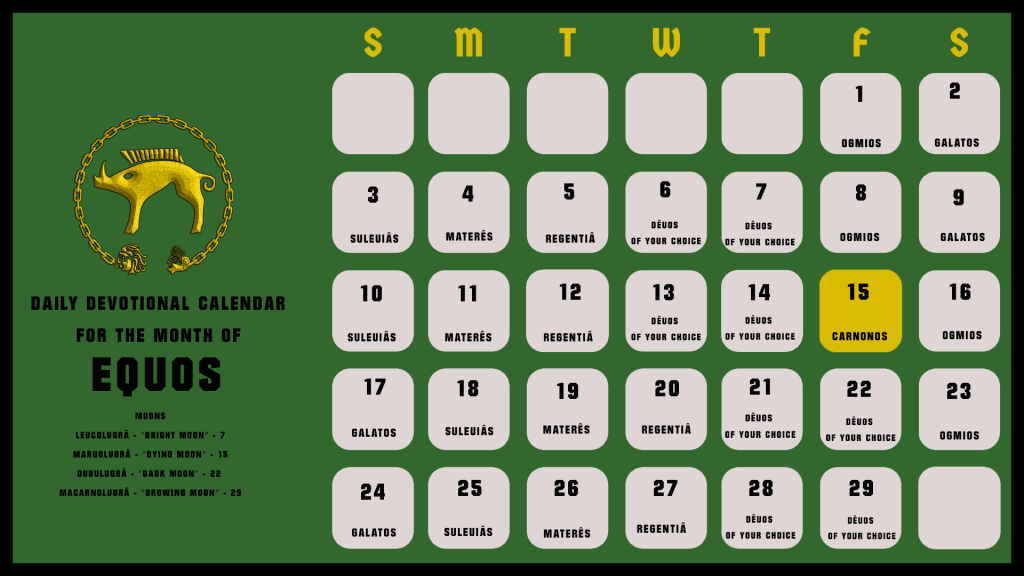
We use our Coligny Calendar app
From the beginning of the month, our structure is as follows:

Each First Quarter moon, we will have a new Calendar for you all.

  • 1 – Ogmios (Ancestor of the Gauls)
  • 2 – Toutatis (Guardian of the Toutâ)
  • 3 – Suleuiâs (Good Guides)
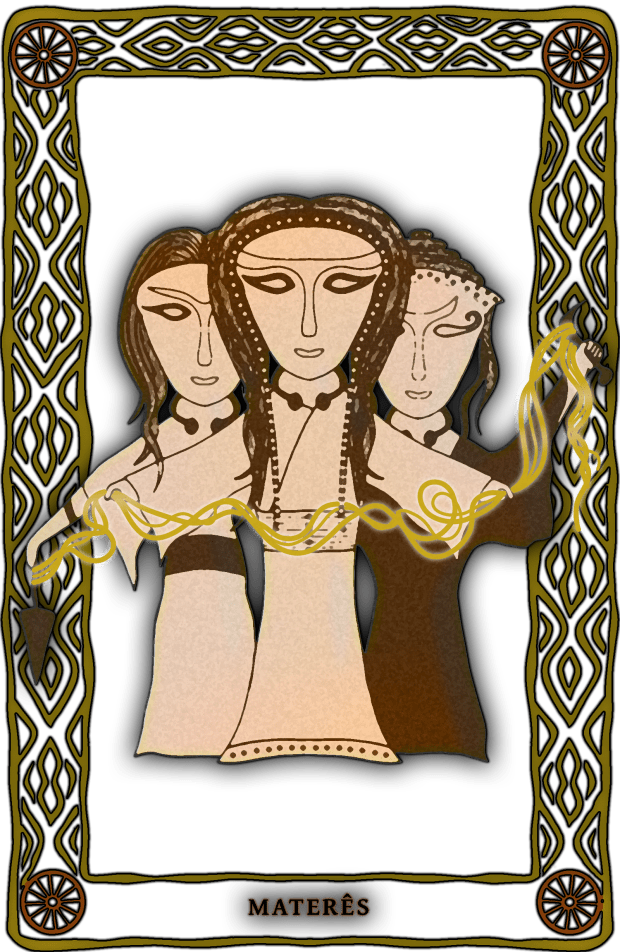
  • 4 – Materês (Knowers of fate, life givers)
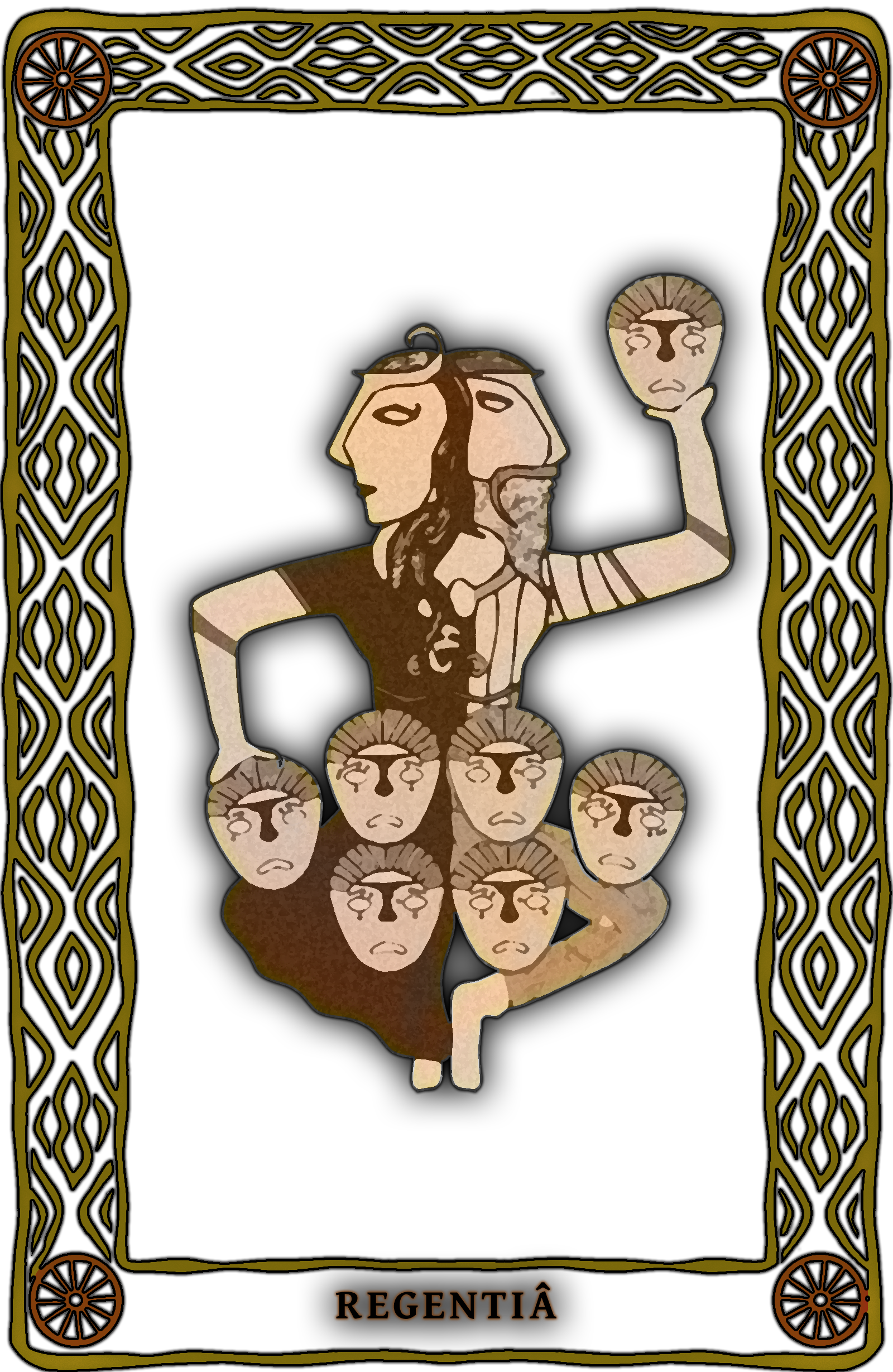
  • 5 – Regentiâ (Ancestors)
  • 6 – Celtînâ (Mother of Virtue)
  • 7 – A “Dêuos of your choice”, or none. Though the former is strongly recommended. Also useful if there is a previous day that one missed. The free spot allows for either a set-aside space for devotional relations or a chance to build new relationships.

This cycle repeats for days 8-14. Thus, we arrive at the middle of the month.

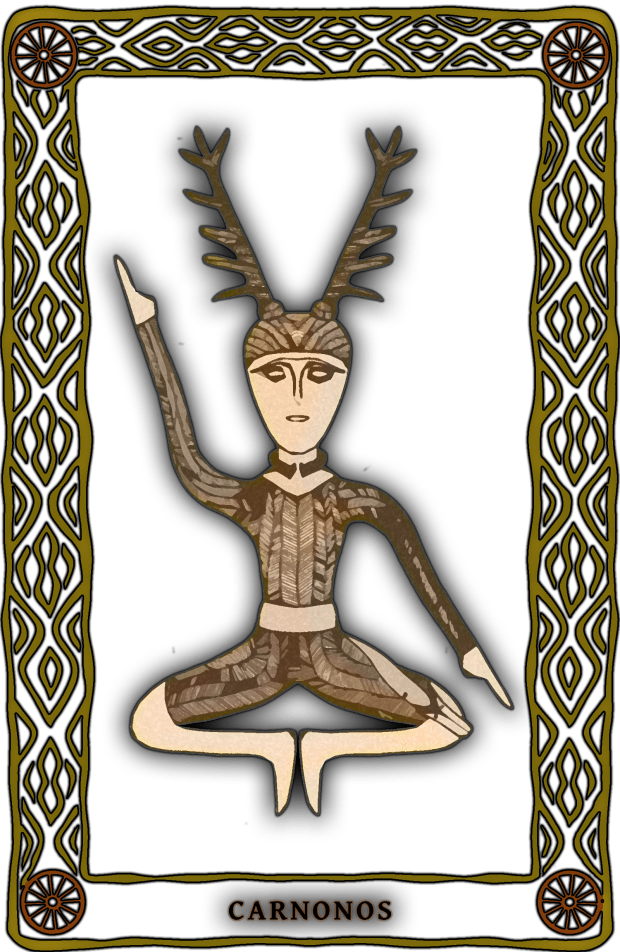
  • 15 – Carnonos (Way opener, guardian between worlds)

After which, the cycle of the first 14 days repeats. Which covers days 16-29.

  • 30 – Carnonos (Way opener, guardian between worlds)
    Carnonos will only show up again in a month with 30 days.
    30-day months are marked matis (good, favorable)
    29-day months are marked anmatis (bad, unfavorable)

May the Dêuoi look favorably upon the attempt, and may they give blessings to you all.

Adgarion for Coligny Calendar Rites

You can find the format of our rites HERE

Ogmios

Diioi I, VIII, XVI, XXIII
Days, 1, 8, 16, 23

Adgarion Ogmiû

Adgariomos/Adgariūmī Ogmion
Cintuatîr Galation
Mârolabâtis
Belolatis
Excenu bebanastû, uxelliâ Galation, rodîssestûnis anuan anson
Rodîmos/Rodîumî adbertâ etic bratûn tê
Addatus
Arcimâs
Slanon te
Bratûn te
Molâmos/Molâmî Ogmiû
Iâmos/Iâiumî in tancê

Invocation for Ogmios

We/I invoke Ogmios
First father of the Galatîs
Great speaker
Mighty hero
From far you came, pride of the Galatîs, you gave us our name
We/I give offering and thanks to you
Offering
Requests
Cheer to you
Thanks to you
We/I praise you Ogmios
We/I go in peace

Gaulish Polytheism, Gaulish Polytheist
Back to table of contents

Galatos

Diioi II, IX, XVII, XXIV
Days, 2, 9, 17, 24

Adgarion Galatû Toutatî

Adgariomos/Adgariūmī Toutaton
Latis Toutiâs
Nertos urittosergios
Uernos Anson
Anegestûnis etic rodîestû tancon
Rodâmos/Rodâmî addatus etic bratun tê
Addatus
Arcimâs
Slanon te
Bratûn te
Molâmos/Molâmî Galatû Toutatî
Iâmos/Iâiumî in tancê

Invocation for the Toutais Galatos

We invoke the Toutatis Galatos
Hero of the people
Mighty against disease
Our guardian
You protect us and give us peace
We give offering and thanks to you
Offering
Requests
Cheer to you
Thanks to you
We/I praise you Toutatis Galatos
We/I go in peace

Gaulish Polytheism, Gaulish Polytheist
Back to table of contents

Suleuiâs

Diioi III, X, XVIII, XXV
Days, 3, 10, 18, 25

Adgarion Suleuiâbo

Adgariomos/Adgariūmī Suleuiâs
Uernâs uissoues
Delgaunâs rextuon
Carâs uîrisamâs
Esue leucos îani uedetesuîs ollon
Rodâmos/Rodâmî addatus etic braton suos
Addatus
Arcimâs
Slanon te
Bratûn te
Molâmos/Molâmî Suleuiâbo
Iâmos/Iâiumî in tancê

Invocation for the Suleuiâs

We/I invoke the Suleuiâs
Wise guardians
Keepers of right
Truest friends
You all are the light of virtue, you guide us all
We/I give offering and thanks to you all
Offering
Requests
Cheer to you
Thanks to you
We/I praise you Suleuiâs
We/I go in peace

Gaulish Polytheism, Gaulish Polytheist
Back to table of contents

Materês

Diioi IV, XI, XIX, XVI
Days, 4, 11, 19, 26

Adgarion Materebo

Adgariomos/Adgariūmī Materês
Biuotus rodamaunâs
Caddos maiamos
Uissuaunâs tonceton
In geni, biuê, etic maruê, uednis etic messus ollon
Rodâmos/Rodâmî addatus etic bratun suos
Addatus
Arcimâs
Slanon te
Bratûn te
Molâmos/Molâmî Materebo
Iâmos/Iâiumî in tancê

Invocation for the Materês

We/I invoke the Materês
Life givers
Most holy
Knowers of fates
In birth, life, and death, guiding and measuring us all
We/I give offering and thanks to you all
Offering
Requests
Cheer to you
Thanks to you
We/I praise you Materês
We/I go in peace

Gaulish Polytheism, Gaulish Polytheist
Back to table of contents

Regentiâ

Diioi V, XII, XX, XVII
Days, 5, 12, 20 ,27

Adgarion Regentiobo

Adgariomos/Adgariūmī Regentiâ
Senomaterês etic Senaterês
Senoueniâs
Regentiâ coimâs
Rodissatesuîs biuotus nîs etic uilietesuîs snî
Rodâmos/Rodâmî addatus etic bratun tê
Addatus
Arcimâs
Slanon te
Bratûn te
Molâmos/Molâmî Regentiobo
Iâmos/Iâiumî in tancê

Invocation for the Regentiâ

We/I invoke the Ancestors
Old mothers and old fathers
Old families
Dear Ancestors
You gave us life and you watch [over] us
We/I give offering and thanks to you
Offering
Requests
Cheer to you
Thanks to you
We/I praise you Materês
We/I go in peace

Gaulish Polytheism, Gaulish Paganism
Back to table of contents

Celtînâ

Diioi VI, XIII, XXI, XXVIII
Days 6, 13, 21, 28

Adgarion Celtînî

Adgariomos/Adgariūmī Celtînan
Cintumatir Galation
Cintus in nertê etic canî
Druticos in ollontobi
Matirmarâ Galation, uxelliâ aisson, ton boudiâ enatâssetnis
Rodâmos/Rodâmî addatus etic bratûn te
Addatus
Arcimâs
Slanon te
Bratûn te
Molâmos/Molâmî Celtînan
Iâmos/Iâiumî in tancê

Invocation for Celtînâ

We/I invoke Celtînâ
First mother of the Galatîs
First in might and beauty
Valourous in all ways
Great Mother of the Galatîs, pride of the ages, your glory begat us
We/I give offering and thanks to you
Offering
Requests
Cheer to you
Thanks to you
We/I praise you Celtînâ
We/I go in peace

Back to table of contents


Free Day

Diioi, VII, XIV, XXII, XXIX
Days, 7, 14, 22, 29
(Refer to Toutâdêuoi and Toutâregentiâ)


Carnonos

Diios XV, XXX
Days, 15, 30

Adgarion Carnonû

Adgariomos/Adgariūmī Carnonon
Uernos mantali
Entar bitoues
Agetios Ecuoues
antê trirîgion sesîi etic ages anatiâ
Rodâmos/Rodâmî addatus etic bratûn te
Addatus
Arcimâs
Slanon te
Bratûn te
Molâmos/Molâmî Carnonû
Iâmos/Iâiumî in tancê

Invocation for Carnonos

We/I invoke Carnonos
Warden of the roads
Between worlds
He Who Guides the Herds
At the border of the realms, you sit and guide souls
We/I give offering and thanks to you
Offering
Requests
Cheer to you
Thanks to you
We/I praise you Carnonos
We/I go in peace

Gaulish Polytheism, Gaulish Polytheist
Back to table of contents

Îuoi in Îanê (Holidays in Virtue)

The Îuoi — for which Bessus Nouiogalation (BNG) has twelve — present us with an opportunity to do more than simply hold festivities, do rites, and get together. While undoubtedly they provide these things, they also present us with another kind of opportunity. That is service. The notion of holidays across the world eliciting the desire or sense of responsibility to engage in community outreach is nothing new. It is something that peoples all over the world engage in doing.

It in turn begs the question: What does that look like for us Nouiogalatîs?

We have twelve Îuoi, as was stated before. So we have compiled from that causes for each of them. Perhaps in engaging in giving and service we can all find good causes to be passionate about. Through our Bessus — in some small way — perhaps we can help make the world a better place. One might donate money, or they may donate time, volunteering. Whether big or small, there’s always something that can be done. In each of the Îuoi, there is an opportunity. They are as follows:

For Sonnocingos Nouios, as Carnonos is the Dêuos for whom the îuos is about we’re reminded of the depiction of Him on the Gundestrup Cauldron. Within which He can be seen alongside several animals. For this, the very first day of the year is dedicated to animal welfare causes. This could be for wildlife, endangered species, or humane societies, animal rescue, adoption, etc.

For Cintusamos — the îuos dedicated to Nantosueltâ and Sucellos — we are reminded of the blooming of the land and the gifts we make of it. Due to this, we recommend supporting organisations or doing direct actions that assist in care for the land.

Diios Nouiogalation is our birthday. For which our Toutatis — Galatos — and the Materês are honoured. From mothers come new life, and those the care for that new life. Due to this, the focus is on the needs of children. So organisations or actions that feed, house, clothe, or educate children are most fitting for this îuos.

On Samolitus we honour Taranis. The day particularly honours the light and fullness of summer that provides for all. In this case, the cause adopted for this is that of social justice. That the blessings of samos can be shared by all. Actions with or donations to organisations that support the needs and rights of marginalised or underserved people is ideal for Samolitus.

Trinox Samoni is specifically about Taranis’s victory against Andangianos, in our lore His archenemy. That the blessings of Samos come with His victory. Due to this, causes and actions that support those who have fought for social justice are the main focus. This can be done by contributing to bail funds for activists, or for pressuring governments to release political prisoners. Again honouring those who strive to make the world better for all and not just the few who already have almost everything.

For Cerdalitus — that is the îuos in which Gobannos is honoured — we look at His skill in forging. In this case, one who is building material things for a specific purpose. It is at this time actions or donations toward causes and organisations that build things for underserved people and communities come to the fore. An example of this is organisations who build homes for homeless people.

When Cintumessus arrives, we celebrate Lugus rescuing Rosmertâ. As it is She who grants the grain harvest, agriculture takes centre stage. So causes that support agriculture are the focus. An example of this would be organisations that teach youths about farming, or projects for community gardens. Ensuring that the fruits of harvest are accessible to all.

Catus Alisiâs is based on the all to well known event that led to the end of free Gaul. There is of course the sadness of knowing their freedom ended the way it did. In the process of that battle, there were people surrendered that the Romans refused to accept. They starved between the battle lines. As such actions and causes that provide food to those who need it is a good way to help make sure such a tragedy doesn’t happen again.

The next îuos, Cintugiamos, is about our ancestors, including of course Ogmios. In this case, we think of ancestors and their contribution to our survival. In this case, of the health of others. As such, organisations providing medical care for underserved or marginalised people, donating things like blood, plasma, etc if one can or is allowed are the main focus for this îuos.

Giamolitus falls around a time that many other holidays also do. As it is not far from but not usually on the winter solstice. The significance of this is that Giamolitus is about togetherness as many other holidays at this time are. For this reason, donations or actions related to helping those in shelters (homeless, displaced, elderly, etc) is the main focus of action on this day.

One focus of Adbiuos is that of cleaning the home of winter’s refuse. But there are other ways one might need to clean. Or “get clean”. In this case, we speak of those struggling with addiction. Direct actions or donations to orgs that help people through the difficulties of living with and freeing people from addiction is the cause adopted for this îuos.

At Uisonnalitus, we give honours to Ðironâ. One thing about Her is that She is Matir Uoberiâs (Mother of the Spring) in this case, of springs that supply water. Though for English speakers, this is also in reference to the time of year known as spring, as it is close to the vernal equinox. Water is a most precious treasure. As such, direct actions related to protecting water, or donations to organisations protecting water are the focus of Uisonnalitus.

As has been demonstrated, there are many causes here that can be championed and diverse causes that our îuoi can be used to do so. Maybe one finds a cause they are passionate about and wish to get more involved within. Or perhaps one can at least take note of the causes related to the îuoi to at least try to do something for them. The point of course is not to imply any of these causes only need attention once a year.

But that we hope that the îuoi give us a chance to remember that even in our busy lives, there are those who need help and support. It isn’t much, but in some small way, perhaps we can make the world a better place. We invite you all to join us in trying.

Ambi Exbiion Anson (About Our Symbol)

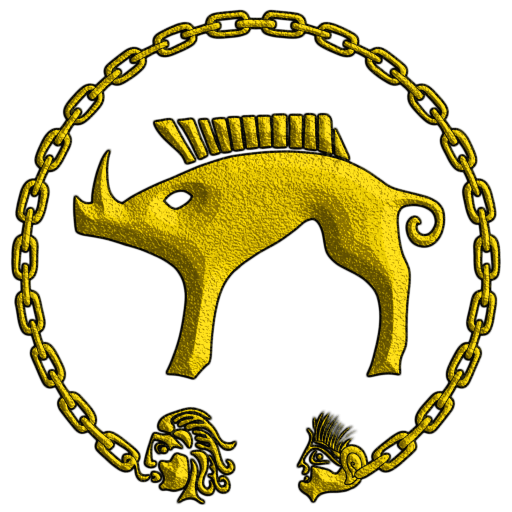
The symbol of Bessus Nouiogalation (BNG) has a few Gaulish elements displayed within it. At the center is a turcos (a boar). The turcos (boar) holds a position of prominence in Gaulish works and displays and is very much associated with them. For us, that means it was important to include it. It is indeed just as common in contemporary works related to the Gauls. The turcos represents galâ (bravery, ferocity in battle) which may explain the widespread prominence and depictions of them from Gaul and beyond.

However, a lonely turcos just wouldn’t do. Our homage to this sacred animal is accompanied by an interesting piece of an account related to Ogmios. Theorized by some scholars such as Ralph Haussler in ‘From Tomb to Temple: the Role of Hero Cults in Local Religion in Gaul and Britain During the Iron Age and Roman Period’ in this entry:

“Indigenous deities like Ogmios appear to be heroes par excellence, comparable to Herakles whose heroic deeds were already known in pre-Roman Gaul. In this view, it should not surprise us that Parthenios of Nikaia considered Hercules to be the ancestor of all Gauls, and that Ogmios could be seen as the god from whom all life originates.”

Ogmios holds a special position in BNG as ancestor of the Gauls. As Galatîs, we too include Him among our diverse ancestors. And so we attempt to reforge this connection in our contemporary environment. For this reason, surrounding the turcos are two heads linked by a golden chain. The head on the left is based on a head found on Gaulish coins that we used in the symbol to represent Ogmios. You can see His tongue being connected to the chain. On the right, you see another stylized head. It is representing a follower of Ogmios, with the chain attached to their ear. This allegory of chains connecting the tongue of Ogmios to the ears of His followers is based on a historical account from Lucian of Samosata. (Full account here.) For the relevant parts:

Our Heracles is known among the Gauls under the local name of Ogmios… [That’s our Ogmios, Lucian!]

This ancient Heracles drags after him a vast crowd of men, all of whom are fastened by the ears with thin chains composed of gold and amber, and looking more like beautiful necklaces than anything else. From this flimsy bondage they make no attempt to escape, though escape must be easy. There is not the slightest show of resistance: instead of planting their heels in the ground and dragging back, they follow with joyful alacrity, singing their captor’s [Hard to say that of the willing, but okay…] praises the while; and from the eagerness with which they hurry after him to prevent the chains from tightening, one would say that release is the last thing they desire.” 

So what we glean here is this: His followers follow Him willingly. They could escape at any time due to the weak bonds but choose not to do so. They follow Him willingly and gladly. This valuable account depicts an important insight into Ogmios and the nature of the followers. Thus we are fortunate to have such a piece of lore preserved.

Like these followers, we Galatîs could choose to break from the bonds of Bessus Nouiogalation (Custom of the New Gauls) if we so chose. These aren’t the chains of force or violence. Sadly far too common in the history and present of our world today. Nor is He guileful or deceitful. His eloquence, His îanolabâ (right speech) is His strength, and so He is followed. Equally so, we try to follow the customs of the Senogalatîs (Ancient Galatîs) in our own time. Freely and willingly. We do our best to make Bessus Nouiogalation available freely and openly to those called to or who desire to be Galatîs. 


Ogmios’s chains bind only the willing who follow Him gladly. However, there are people around the world who do not have such gentle chains. Who are not bound to a Dêuos like Ogmios, but to cruel and barbaric people. As such, if you’d like to help people who have suffered such anuîrolaniâ (injustice), we’d ask you to consider making a datus (donation) here, to the organization ‘Not For Sale’. Which combats human trafficking and provides resources to survivors.