Cingos Ammanês (Calendar) Part 1

Gaulish Polytheism, Coligny Calendar

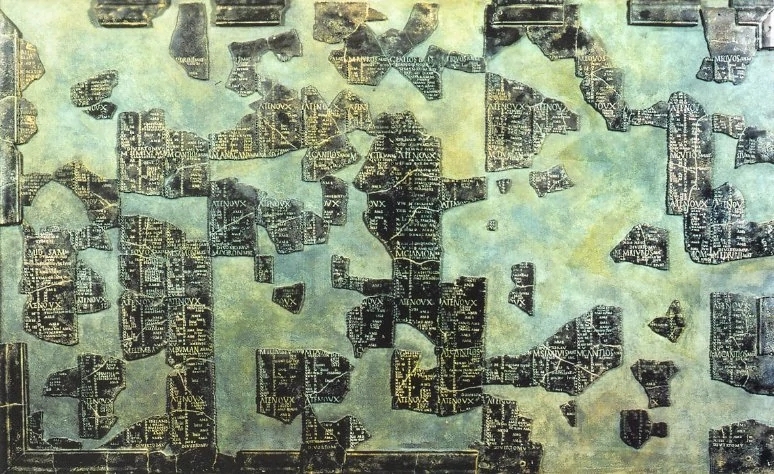
The Sequanni, or Coligny Calendar (used interchangeably) is a parapegma, that is, a bronze calendar with peg holes in it that marked each day. It was discovered in 1897 in Coligny, Ain, France. It is thought to date to the 2nd century CE. Almost everything about the calendar is hotly debated. Some theories are more popular than others, and perhaps we will never all agree. However, there are some context clues from what little can be reasonably assumed about the calendar, and a workable model will be presented.

With that said, let’s explore a little on the matters of timekeeping that we know. Caesar mentions that the Gaulish people considered the day to start at sundown. This isn’t really unusual, the Jewish people reckon the same with their own calendar, for example. Thus the reason their sabbaths start on Friday night. Considering that where they lived at the time of the Gauls were some distance away from the Gauls, starting the day at sundown was not at all uncommon in the ancient world.

Caesar didn’t likely gain anything from making mention of this, and so it is likely a truthful observation. The history of issues (to put it lightly) between Gauls and Romans were certainly not because of their differing approaches to calendars. With that said, we can safely wager that the day begins at sunset.

All the Gauls assert that they are descended from the god Dis, and say that this tradition has been handed down by the Druids. For that reason they compute the divisions of every season, not by the number of days, but of nights; they keep birthdays and the beginnings of months and years in such an order that the day follows the night.

Julius Caesar in The Gallic Wars states (Caesar, DBG 6.18)

We also have a mention of timekeeping in Gaul by Pliny the Elder.

The mistletoe, however, is but rarely found upon the robur; and when found, is gathered with rites replete with religious awe. This is done more particularly on the fifth day of the moon, the day which is the beginning of their months and years, as also of their ages, which, with them, are but thirty years. This day they select because the moon, though not yet in the middle of her course, has already considerable power and influence; and they call her by a name which signifies, in their language, the all-healing.

Pliny Natural History 16.95

Over The Moons

The months have either 30 or 29 days. 30 day months are noted Matis (MAT), the 29 day months Anmatis (ANM). In this respect, we cannot help but notice that the Attic Calendar, used by ancient Athenians, marks months as “full and “hollow”. It is worth noting that Greek culture was prestigious to the Gauls, especially before their fall to the Romans. Sequanni territory was not very far from the Greek colony of Massalia, and it wouldn’t be surprising if the Greeks had some influence on the Sequanni Calendar. This isn’t to say that the ancient Gauls weren’t already using a lunisolar calendar as it were. Which the Sequanni Calendar certainly is.

A lunisolar calendar attempts to reconcile the lunar months with the solar year. This is a relatively old style of timekeeping. Though purely lunar calendars like the Islamic Calendar do exist. Then, of course, the modern calendar, which gets its start in Rome, who weren’t about lunar months, apparently. They were more interested in the solar year. Now, back to Gaul, where the Sun and Moon must agree, at least somewhat. Most of the time, the Sequanni Calendar has twelve months, the first and third year in a five year cycle have thirteen. The first month is Samonios, something that is not debated.

The months start at the first quarter moon. This is an easy moon phase to spot, and it accents the binary fortnight division explained earlier. This centers the full and new moons in each fortnight, half month.

We offer “Are Ambicatû”, or “Before Ambicatus” as a term to date any years before the reign of Ambicatus, a legendary king. After those years, “Sepans Ambicatû” or “Following Ambicatus”. As opposed to BCE and CE or BC and AD. The app we use (from Ucetion Ammandelgaunon) provides the current year, which is year 11, as we start the year with Helen’s work which began in 2015. This work (from Helen Mckay) helps with notations.

The Months

At the most basic, and we’ll get to intercalary months in a minute, the months are as such, with rough Gregorian equivalents:

Coligny MonthGregorian Approx.DaysNotes
SamoniosMay–June30First month
DumanniosJune–July29
RiurosJuly–August30
AnagantiosAugust–September29
OgroniosSeptember–October30
CutiosOctober–November29
GiamoniosNovember–December30“Winter” month
SimiuisonnaDecember–January29
EquosJanuary–February29–30Alternates to maintain lunisolar alignment
ElembiuosFebruary–March30
EdriniosMarch–April29
CantlosApril–May30

These are your basic twelve months in order. So, what about those intercalary months? We are less certain. Quimonios (the end of the first segment of the calendar as “QVIMON”) and Rantaranos  (the “r” is speculative, but “ANTARAN” is read from the fifth line of the 32nd month) are the two intercalary months inserted to even out a five year cycle. Before Samonios and Giamonios respectively.

It’s hard to say what many of the months mean. The foundation of most versions is what they believe the month of Samonios means.  Whether it means “summer” or the end of summer. The latter of which is what leads some to believe Samonios is cognate to Samhain. Some believe Samonios means something like “assembly, gathering”.

However, the frame of reference we use to build a conclusion is not Samonios, but Giamonios. Which has less controversy around it, and is agreed upon to mean something related to “winter”. To our knowledge, no one claims it means “winter’s end”. A poor choice then for a summer month. Buttressed by the infix -on- that is seen in many deity names taken to mean “great, divine”.

Therefore, here the calendar starts in the summer. This is not unheard of, as the Attic Calendar, one of many in Ancient Greece, also started in the summer. The Greeks being a big influence on the Gauls makes this essentially unsurprising.

Usage

As stated before, the month starts at the first quarter moon. This means the third denotes the halfway point of the month. We see on the calendar “ATENOUX”, meaning “renewal, return”. Also, appearing in a half circle, like the first quarter fits the binary division of the month. “Light” and “Dark” halves.

Matis months have 30 days. Anmatis months have 29 days. The first half month is always 15 days, the second is either 15 or 14 days. The month of Equos alternates in days. Can be 30 or 29. This is of course an attempt to keep the calendar in a lunisolar harmony.

The Coligny Calendar operates in 5 year cycles. This is regardless of the 25, 30, or proposed 19 year Metonic cycle. The last only differs in that one intercalary year is dropped in the last 5 year cycle, taking it down to 4 years.

Why use a Metonic model? This is because changes were already thought to have been made to the calendar. The Coligny Calendar could well have been one. It would have taken very little effort to make one from where the calendar during its time of use. A Metonic cycle is an extremely accurate model that works perpetually. In other words, it’s an attempt to save future generations the trouble of having to make changes to one of the other models. This will make tracking and cataloguing history easier. Making this not only a liturgical, but practical option. A full, all purpose calendar. This also allows for history to be recorded.

Year 1 has the month Quimonios starting the year, then the normal 12 months. Year 3 has Rantaranos before Giamonios, thus the 7th of 13 months in that year. The second, fourth and fifth year are 12 month years. This 5 year cycle happens three times. The fourth time, Year 1 is dropped, making it a grand cycle of 19 years, then the calendar starts over again. Every 61 years, one day is dropped from Equos on the 5th year. If someone had a replica plaque, they’d never have to change it. They’d simply cover up the first year of the fourth cycle.

At the date of writing, (11 December, 2019), we are in the month of Giamonios. It started on 4 December. This means you can use the normal 12 months until then to know what months come next.

Check out our Calendar app, which was created by Ucetion Ammandelgaunon. A big thank you to them for creating this for us.

Check the day, and don’t forget to keep an eye on the moon!
Gaulish Polytheism, Gaulish Polytheist

Part 2: Gaulish Timekeeping

Continue reading “Cingos Ammanês (Calendar) Part 1”

Andegenton (Creation)

In the age before this world, a mystery shrouds, Born in darkness, the universe unannounced. Then, in a blaze of light, creation unfurled, A tale of fire and water, the elements whirled.

From the mist emerged a cow and a bull, Majestic and strong, they stood tall. Bouindâ, the cow, fed on the vaporous haze, Her udders brimming with nourishing praise.

Uindotaruos, the bull, thrived on her milk divine, His brawn and might a force to enshrine. More mist nourished Bouindâ, life’s grand course, Uindotaruos sowed his seed with a powerful force.

Two children were born from this divine blend, Litauiâ, radiant and broad, her beauty did transcend. Dêiuos, strong and tall, born from breath’s embrace, Destined for greatness, with wisdom and grace.

Yet, Uindotaruos foresaw a fateful plight, His heart overflowed with love, despite. A sacrifice he’d make, for his newfound kin, His final offering, his life’s ultimate win.

When Dêiuos reached maturity, the task at hand, He fulfilled the plan, with courage’s command. He struck, he strangled, he took Uindotaruos’ breath, A solemn act, sealing their destinies’ breadth.

Uindotaruos’ head became the sun above, His tears sparkled, the stars to inspire love. Litauiâ took his blood, deep well she made, From Uindotaruos’ backbone, Drus was laid.

Seeds from Drus grew in the well’s embrace, Ungods, Cauaroi, giants took their place. Feeding on Uindotaruos’ flesh, they grew strong, Warriors fierce, with power they belonged.

Dêiuos and Litauiâ’s family grew, In union, they thrived, their love stayed true. Three brothers and Three sisters stood tall, leading the way, Kindness, strength, wisdom, their virtues array.

The Cauaroi despised this family anew, War raged on, a never-ending brew. With Uindotaruos’ flesh nearly spent, Hunger loomed, the children’s torment.

Litauiâ prepared a fortress with care, Yet, they couldn’t stay forever there. A sacrifice was required, a heavy toll, Bouindâ knew what fate would unroll.

Bouindâ offered herself, a heartrending choice, To shape the world, a sacrifice of voice. The brothers struck, with tears in their eyes, They shaped this world, a great enterprise.

From Bouindâ’s body, creation arose, Mountains, forests, rivers, all took repose. Her skull, cast high, adorned the night, Becoming the moon, a celestial sight.

Her blood formed the seas, in waves they danced, Her milk became rivers, through lands enhanced. From Bouindâ’s bones, majestic peaks grew, Her teeth turned to stones, strong and true.

Her hair became forests, where life would dwell, A wondrous tale, in nature’s spell. Life flourished, the universe unfurled, A gift of abundance, a magical world.

Under the watch of the first family’s might, Cauaroi and Dêuîs engage in a timeless fight. The three brothers and three sisters claimed their realms divine, Dumnos, Albios, and Bitus, each a sign.

Trasnemos (Astronomy)

The idea here is to build the foundation of a Gaulish astronomy. Hoping that we can start a move toward bringing more Galatis focus into our lives and works. The ultimate goal of course being the furthering and expansion of ideas and avenues of exploration for all Galatîs.

Most of this work comes from a work based on Gaulish language scholarship, but is made to be used as a living language: Nouiogalaticos. The works of which have yet to be published.

Be aware, however, that we had to play a little fast and loose with the language. So there are plenty of words that were Gallicised. Others may dispute them, but if we’re waiting to be perfect and always agreeable to everyone, we’ll get nothing done.

Within, you will find that most figures from Mediterranean lore have been given Gaulish figures in their place. As it was common for the Gauls to take something from the Mediterranean world and inject their own worldview and ideas.

Trasnemos Galation (A Galatîs Astrnomy)

Reuîs (Planets):

Mercury – Galatos
Venus – Ðironâ
Earth – Litauiâ
Mars – Camulos
Jupiter – Taranis
Saturn – Sucellos
Uranus – Dêiuos
Neptune – Grannos

Allocarboi (Other Bodies):
Sun – Sonnos
Moon – Lugrâ
Pluto – Iêmonos

Consseriâ (Constellations):

Andromeda – Cammâ (Gaulish heroine)
Argo Navis – Mârolongos (Great Ship)
Aquarius – Alaunâ (A Dêuâ)
Aquila – Etros Taranês (Eagle of Taranis)
Ara – Carnâ (Altar, in this case stacked stones)
Aries – Moltos (Ram)
Auriga – Eponâ (A Dêuâ)
Boötes – Intarabus (A Dêuos)
Cancer – Crancos (Crab)
Canis Major – Cû Sucelli (Hound of Sucellos)
Canis Minor – Colignos (Lap Dog)
Capricorn – Morigabros (Sea Goat)
Cassiopeia – Rosmertâ (A Dêuâ)
Centaurus – Uanderos (Centaur)
Cepheus – Ambicatus (Gaulish King from legend)
Centus – Morimilon (Whale)
Corona Australis – Samorix (Summer King, my own idea)
Corona Borealis – Giamorix (Winter King, ditto)
Corvus – Catuboduâ (A Dêuâ)
Crater – Annâ (Cup)
Cyngus – Elârci (Swan)
Delphinus – Morimoccus (Dolphin, lit. Sea Pig. That’s what I was given. Don’t at me.)
Draco – Angos (Dragon)
Equuelus – Epilos (Little Horse)
Eridanus – Abonâ Ðirânon (River of Stars)
Gemini – Iunoi (Twins)
Hercules – Ogmios (A Dêuos)
Hydra – Andangianos (Eneny of Taranis, our own idea)
Leo – Lugus (A Dêuos)
Lepus – Casnos (Hare)
Libra – Talos (Balance)
Lupus – Lucos (Wolf)
Lyra – Crottos (Lyre)
Ophiuchus – Natrix Carnoni (Serpent of Carnonos)
Orion – Aisus (A Dêuos)
Pegasus – Epos Etrontos (Winged Horse)
Perseus – Loucetios (A Dêuos)
Pisces – Esoges (Salmon)
Piscis Australis – Esoges Dexsiuî (Southern Salmon)
Sagitta – Isos (Arrow)
Sagittarius – Belinos (A Dêuos)
Scorpio – Scorpios (Scorpion)
Serpens – Natrix Ðironiâs (Serpent)
Taurus – Taruos (Bull)
Triangle – Triocelon (Triangle)
Ursa Major – Andarta (A Dêuâ)
Ursa Minor – Artiû (A Dêuâ)
Virgo – Nemetonâ (A Dêuâ)

What isn’t in Nouiogalaticos, but a couple of words, we simply tried to work forward from Proto Indo-European, or directly loaned and Gallicised from Ancient Greek.

As was mentioned, we know that there are a lot of speculations on the Gaulish language and that any diealect of it is impossible to know in full. However, if Galatîs are to move forward, we must have a language.

Îuoi (Holidays)

Jump to the list of Îuoi (Holidays)

As with any other custom, a Gaulish custom one needs holidays. Those special times of year where we come together to observe specific Dêuoi for specific reasons. As well as attuning ourselves to the cycle of the seasons and what that means for us. Bessus Nouiogalation is no exception.

In a previous article, we talked about the Sequanni / Coligny Calendar. The IVOS clusters on the calendar are thought to denote holidays. That being the case, it gives us an idea of where to put at least some holidays. Therefore, it’s fitting to use those clusters to put forth a kind of list of holidays. Along with that, using their placements in the year, we’ll try to use that as a guide to figure out both what to call these holidays and what they may be about. In this way, even if we don’t know the original traditions, we can be inspired to develop some of our own. For reference sake, we use the BNG Coligny Calendar.

In the history of the calendar, the length of an age, or where the calendar completed its cycle, went from 30 to 25 years as time went by. As the Metonic cycle is the most accurate as far as lunisolar timekeeping goes, as without it, there is quite an eventual drift. It seems to be a good borrowing. This puts the calendar’s full cycle at 19 years. Remembering that the calendar was originally in a temple to Apollo, who was said to make a journey to the land of the Hyperboreans (a mythic people who lived “beyond the lands of the Celts”) every 19 years. So, it’s far from the least plausible leap. By retaining the names of the months and being able to keep up with the same methodology of a lunisolar calendar, we see a synthesis of retaining the old while being able to adapt and borrow as the Gauls themselves did.

So, with that reference noted, we should also say that even without the Metonic adaptation, the holidays are still in the same time range. Though the purpose of this article is not to discuss the calendar, we wanted to give some background into the frame of reference we use for the holidays. What we see when looking at the calendar is that there are several points in the year where the notation ‘IVOS’ is attached to several days in a row. As Iuos notations cluster around certain times of the year, it can be assumed that they are likely holidays. It cannot be said for sure how long a given holiday was observed. As the clusters may point to a range of time in which it was acceptable to observe a given holiday. The pain with the Iuos clusters is that though they are consistent, they still show up in different months on the calendar throughout the years.

Though intercalations are involved with that slight distortion, the timing of the holidays themselves are actually completely consistent. So, on the calendar, the clusters will show up in one month or another, at most two. However, it is still consistent because these clusters are marked by one specific moon. In other words, an Iuos cluster may show up around 1 Simiuisonna one year, and near 1 Equos the next, but it will be the same moon in the lunar cycle. The months start at the first quarter moon, in line with Pliny the Elder’s statement that the Gauls started their months six days after the new moon. This assumes a first-quarter start, and a first-quarter moon is easily visible. If this sounds confusing —and it did to us at first —it will be made clear in this list of holidays.

Remember that the moon (Lugra) is your friend.

A side note: not all of our holidays fall within the calendar clusters. But most do.

Our wheel of the year.

  • Sonnocingos Nouios “New Year” – This one needs the calendar linked above for reference.  As it’s the first day on the calendar itself. 1 Samonios is the date most years. Whenever there is an intercalary month of Quimonios, it is 1 Quimonios.
  • Diios Nouiogalation “Day of the New Galatîs” – The Birthday of Bessus Nouiogalation always falls on 9 Samoni.
  • Cintusamos “Start of Summer” Also called Îuos Nantosueltiâs etic Sucelli. Always two first-quarter moons before the summer solstice.
  • Samolitus “Summer Feast” Also called Îuos Taranes.
    Always the first quarter moon before the summer solstice.
  • Trinox Samoni “Three nights of Samonios” – This one also requires the app linked above. Starts on 17 Samonios. Usually, the third quarter moon closest to the summer solstice. However, it can be on or just after it. No more than a week after.
  • Cerdolitus “Crafting Feast” Also called Îuos Gobanon.
    Third quarter moon before Cintumessus below.
  • Cintumessus “First Harvest” Also called Îuos Lugous
    Always two first-quarter moons after the summer solstice.
  • Noxsās Decan Grannī
    The second first-quarter moon before the autumn equinox.
  • Catus Alisiâs “Battle of Alessia” – Third quarter moon closest to the autumn equinox. Always 17 Ogronios.
  • Cintugiamos “Start of Winter” Also called Îuos Ogmi.
    Two first-quarter moons before the winter solstice.
  • Giamolitus “Winter Feast” Also called Îuos Eponiâs.
    The full moon closest to the winter solstice.
  • Adbiuos “To Life, Quickening” Also called Îuos Suleuiânon.
    Two first-quarter moons after the winter solstice.
  • Ducospia Carnuton “Rebellion of the Carnutians” – Closest to the full moon before the Spring Equinox. Always 9 Elembi.
  • Uisonnalitus “Spring Feast” Also called Îuos Sironiâs.
    Just after the new moon closest to the spring equinox.

Îuoi in Îanê (Holidays in Virtue)

These are the holidays, or as has been jested about, “Gaulidays”

More Information on the Coligny Calendar Here