Ancestor worship is one of the oldest and longest-lasting practices we know of, and the most persistent. In fact, forms of it still linger in almost every society. The dead are often treated with a sense of reverence. And many cultures carry on revering folks long after their deaths. Though less can be said with certainty, the Gauls were no exception. It is known that they had burial mounds, though less often than the Gauls’ own ancestors. Burials did indeed occur, however. Finding these burials is one of the most common ways of finding information about the Gauls, and many other peoples that didn’t leave much documentation of themselves. Ubiquitous for their part of Europe is the cult of the head. It has been confirmed that the Gauls embalmed heads. This is often considered to have been done to their enemies. However, it’s nearly impossible to prove whether or not that is the case. Jean Louis Brunaux in ‘The Celtic Gauls: Gods, Rites, and Sanctuaries’ (p.88), had this to say:
“Another presumption in favour of ancestor cult comes from an ethnographic parallel very close in both time and space, from the peoples of the Altai in the Scythian sphere as far as Mongolia. Among all these peoples the removal of enemies’ heads was a widespread custom: the account of Diodorus Siculus gives of the Gauls, is related by Herodotus about the Scyths, and by Abul Ghazi about the Tartars and Mongols. Now, all these populations practised the cult of the head of their ancestors alongside it. To preserve these prestigious bones was to appropriate the soul of the one whose power they desired to possess, whether this was a relative or an enemy.“
While the Roman accounts do provide an insight into the cult of the head. It appears — and taking their political biases into account — that they got to about half of the potential truth. So of the poorly attested accounts of Gaulish ancestor cult, we have at least that much. This begs the question to those of us in Bessus Nouiogalation: What do we do with it?
Let’s take this — generally unpalatable to the modern taste and legal system — approach and do something with it. Obviously, it’s not recommended, or legal in most places, to preserve the head of your dearly departed Senatîr, “Pop Pop, Abuelo, etc.” (grandfather). Okay, got it. But we can still make use of the motif. Fortunately, replica resin skulls (ironic as resin was used for embalming the heads at times) are often easily available. So when honoring our ancestors, we can still carry on the Gaulish motif of the head.
Other ways to honor our ancestors would be visiting their graves. Much as folks still do, where they still leave offerings to their ancestors to this day. This is a practice that has survived for thousands of years. On the Aidû “sacred fire, altar” pictures of your dearly departed are another way to do this. And there are many others. Be creative! Now comes the common question of ancestry and if one’s ancestry “matters” in regard to custom. On this, BNG has two things to say about this:
All who wish are welcome to practice BNG, and/or any Gaulish custom regardless of their ancestry.
Anyone in any Gaulish custom can count the Gauls as among their ancestors as we are inspired by them. Blood or not, doesn’t matter. And historically this is confirmed, as well as morally understood today by all Galatîs.
Another thing to remember about Ancestors is that this includes adopted ancestors. If one is adopted, then the ancestors of those who adopted you are your ancestors as well. As well as those who have gone who had a significant impact on your life in pretty much any way. Anyone, related or not who helped shape you into to the person you are, or family, group you are in, that has passed on can be considered an ancestor. The last thing, is the ancestor of the Gauls themselves. Different Galatis have different answers to this question. In BNG, it is Ogmios. Based on interpretations not only by Brunaux, but also Ralph Hauseler in this treatise (free PDF from academia.edu if you click there) called ‘From Tomb to Temple: the Role of Hero Cults in Local Religion in Gaul and Britain During the Iron Age and Roman Period’ has this to say about Ogmios:
“Indigenous deities like Ogmios appear to be heroes par excellence, comparable to Herakles whose heroic deeds were already known in pre-Roman Gaul. In this view, it should not surprise us that Parthenios of Nikaia considered Hercules to be the ancestor of all Gauls, and that Ogmios could be seen as the god from whom all life originates.“
So here, Bessus Nouiogalation incorporates both an Gaulish-inspired cult of the head, and an ancestor that we and any other Galatis who chooses can share with the ancient Gauls. Burriâ is the word here we give, it means both pride and infatuation. When we look at the Gauls and the modern Galatis customs that develop, it is both pride and love we feel.
AdgarionRegentiobo
Adgariomos/Adgariūmī Regentiâ Senomaterês etic Senaterês Senoueniâs Regentiâ coimâs Rodissatesuîs biuotus nîs etic uilietesuîs snî Rodâmos/Rodâmî addatus etic bratun tê Addatus Arcimâs Slanon te Bratûn te Molâmos/Molâmî Regentiobo Iâmos/Iâiumî in tancê
Invocation for the Regentiâ
We/I invoke the Ancestors Old mothers and old fathers Old families Dear Ancestors You gave us life and you watch [over] us We/I give offering and thanks to you Offering Requests Cheer to you Thanks to you We/I praise you Regentiâ We/I go in peace
It’s important to note that Dêuoi aren’t always going to be the main focus of such rituals. As Galatîs, and especially in BNG, there are many spirits other than deities with which we have encounters through more or less formal rites.
One of those which is less formal is that concerning the Tegatis, or “one of the house”. From Tegos “house”, and -atis “the one of”, such as in Toutatis “the one of the tribe”. Your house spirit. Of course this also applies if you live in an apartment. House spirits aren’t something recorded from Gaul because household practices such as this weren’t really recorded. Though it is possible that the severed heads that some Gauls were known for keeping, or perhaps the bones of an ancestor helped serve this function. Or burying the body of a deceased family member within the premises of the homestead. Though we should not judge these ancient practices with modern eyes, they certainly aren’t legal in most places in the modern day. The Gauls were far from alone in doing this. But they are obviously not recommended practices to revive.
However, this is something found in many cultures including many of the neighbours of the Gauls at various points in time. One example is the Roman Lares. Amongst Germanic peoples the Anglo-Saxon Cofgodas, German Kobolds, and Swedish Tomte. The Slavic Domovoi are another example. Often customs related to such beings long outlasted the end of pre-Christian religions in Europe. Others like the Welsh Bwbachod, as well as English and Scottish Brownies are known later still. The lore for all of these beings is different, of course. As the Tegatis in BNG may differ from the above listed as well, but exists in some similar veins.
As all things have spirits — a principle of Anationton or “Animism” your dwelling is no exception. Therefore your, yes your home has a spirit. It is important to form a good relationship with that spirit. However, this is not the same as a formal rite in which we invoke a deity. You don’t need to invoke the Tegatis because they’re already there. They live in your home with you. The Tegatis, when given offering and respect blesses and protects the home. In BNG, there is a synthesis of many origins for the Tegatis. As a known Gaulish take isn’t really to be found, we have taken the step to help establish this piece of Galatis folk culture. As the house spirit has a centuries, and more, long place in many cultures throughout the world. And so they come in many shapes and forms.
On the subject of house spirits, an excerpt from the aptly titled ‘Tradition of the Household Spirits’ by Claude Lecoteux (Kindle edition) has this to say:
“The house spirit therefore falls primarily under the jurisdiction of folk religion; he was part of our ancestors’ mental structures and embodied a transcendent element that people could turn to in need. It corrected adverse situations, redressed inequalities, and provided valuable assistance. In short, its existence offered reassurance because it gave physical expression to happiness and to the order without which nothing could prosper.”
And so it is in this tradition. Thus the Tegatis has a deep importance. Even if the way in which we may address this being is done in a less formal manner. From the experience of members of BNG, the Tegatis actually asks for quite little in return for its blessings. Two things immediately come to mind. The first is to keep the house reasonably clean. After all, the Tegatis lives there as well. They tend to prefer a safe, clean place to live. The second is regular offerings. As the Tegatis gives, the Cantos Ratî (Circle of Gifting) strongly suggests that we give something back. Whole milk, butter, oatmeal, porridge, incense, or coins tend to be safe offerings. But individual Tegatîs (the plural form of the word) may also have their own tastes and so it’s important to try to be aware of that.
One can fashion their own image of a Tegatis. Or a miniature of a gnome, dwarf, fairy (even in the way they are depicted these days) can work as well. There are many options here. They can be any gender. To offer to the Tegatis in the BNG way is quite simple. When speaking, a simple address, salutation, and offering are sufficient. As the Tegatis specifically blesses and protects the home.
A sample, in both Iextis Galation and English follows:
Bessus Nouiogalation (BNG for short) is a toutâ (people, “nation”). One can practice the traditions of it or parts of it, and no further attachment is needed. However, all who associate with BNG or identify as Toutioi must follow the îanoi, or you will be found out and removed. Absolutely nothing is required of you except being a good person of decent character (which excludes bigots and the like by default).A Toution (gender neutral, Toutiâ and Toutios are feminine and masculine, respectively), meaning “citizen” is someone who has chosen to dedicate themselves to the BNG touta (or people). You must actually follow the bessus to be recognized as a toution of the toutâ.A Toution is someone who feels called to service. This basically means being active in the Nouiogalatis community, as well as interacting with other BNG members so that we get to know each other and can plan events together while respecting personal boundaries.
Initiation Rite Introduce yourself to the Toutâdêuoi, Toutâregentiâ, and the Îanoi of Bessus Nouiogalation and become an initiated member (Toution) of our bessus.
The Delgaunoi or “keepers” tend to the development of BNG itself. There are three currently. The duties of the Delgaunoi are to serve as custodians of BNG, coordinate community involvement in the bessus, and teach the practices to those new to our toutâ. They convene to facilitate the creation of the community and release new material as the need or inspiration arises, as well as listen to suggestions from the community. The Delgaunoi are required to act by the Îanoi, or “virtues,” in everything they do. Though perfection isn’t expected, accountability is. Delgaunoi must attend community rites, engage in discussions, and generally help tend to the community. Failure to do so will result in the Delgaunon being removed from their post. Ultimately, their responsibility is to the toutâ, to guide growth, incorporate new lore and add to the custom, and adapt the organizational structure to the needs of the toutâ.
While it is not mandatory to interact with other members or spend a significant portion of your time communicating online, we simply ask for a Toution to make a small effort for BNG’s community, as it is a matter of giving back. Being a Toution is about making a firm dedication.We tend to interact on Discord, a chat site that has a voice chat option where BNG members meet to build community and participate in group rites and holidays.
Taranis brings us the Îanoi (Virtues). If one is the center of the wheel, and the rim is that which is literally around us (family, community, the world, etc.), the virtues are the spokes. With all spokes present, the wheel can roll forward. The more spokes present, the smoother the ride. Too few, and the wheel breaks apart. Everything is connected in the great cycle of the cosmic order of things,each leading and affecting the other.
Ambactos Rotî (ambassador of the wheel) are those of us that follow the teachings of the wheel of Îanoi. We dedicate ourselves to the ever-spinning motion.
For a reading of this article in English, please click here.)
Îanoi, which in a more literal sense means from Îanos “right, just, correct,” essentially, in this case, “things that are right or correct.” For the purposes of the Bessus Nouiogalation (that is, “Custom of the New Galatîs,” plural form of “Galatis”), it also encompasses the term “virtues.” The understanding of virtues is essential so that we have a guide to live our lives in a way that helps us be better people. In turn, this helps us be better members of our communities.
So why codify something like virtues? The answer to which is simple, they give us something to refer to when we lose our way. The Dêuoi (worshipped beings) fulfill their actions perfectly. But they are Dêuoi. We are Donioi (humans). We aren’t perfect in our actions. No one is, and that’s okay. Every now and again, it doesn’t hurt to remember Nouiogalatis virtues, inspired by those of the ancient Gauls. As they will help us re-center ourselves and keep us in accordance with what is right.
The way we will break this down is by looking at what was thought to be the three laws the Druides (singular: Druið, pronounced “Dru-its”) taught. As you may guess, it translates to Druid. Though with the last law, we’ve been able to apply a more general interpretation to it. As our understanding of that one has changed. You’ll understand when you see it. We will list one law at a time, and there will be four virtues assigned to each to help us live up to each law.
They were originally recorded by Diogenes Laertius’s “Vitæ,” introductory verse 5:
I. The gods must be worshipped.
II. No evil done.
III. Exercise valour.
Now, we must be aware with the third law that there are multiple interpretations of it. And this is but one translation proffered. Another mentioned “manly behavior”, but even to the Gauls, there’s no reason to assume they only attributed these qualities to men. We must remember that these laws were recorded from someone who wasn’t a Gaul. After all, Onomaris was certainly courageous in leading her people to the east. We also must remember that valor doesn’t just apply to warriors. We can all think of people who have done courageous things far outside the field of combat that uphold notions of valor.
As such, in Bessus Nouiogalation — an independent and contemporary Gaulish-inspired custom — we strive to uphold these laws among our community. Developed from our interactions within Galatibessus of which we are a part, and dialogue with members of our specific bessus (custom). They are called the Trirextoues (The Three Laws).
Trirextoues/The Three Laws
Dugie Dêuûs – “Honor the Gods”
Gneie ne drucon – “Do no evil”
Delge āxtam – “Hold your behavior”
With these laws established, there are twelve virtues, and four each helps us align ourselves with these laws. So we will visit each law and discuss relevant virtues that can guide us. It should go without saying that there are more than twelve good qualities that can be exercised as virtues. However, many will relate to the ones discussed.
Let us start with the first law:
Dugie Dêuûs – “Honor the Gods”
Dêuocariâ (piety) Piety is important because by seeking and acting on honoring the Dêuoi, we bring ourselves closer to them. In doing so, it helps us learn all other right actions. Not every pious person is otherwise virtuous. However, they’re arguably not pious. As part of piety is not simply regular worship, but learning the virtues each of the Dêuoi has to teach.
And a peculiar and striking practice is found among the upper Celts, in connection with the sacred precincts of the gods; as for in the temples and precincts made consecrate in their land, a great amount of gold has been deposited as a dedication to the gods, and not a native of the country ever touches it because of religious scruple, although the Celts are an exceedingly covetous people.
Diodorus Siculus, Library of History V.27
All the Gauls are extremely devoted to superstitious rituals.
Caesar, The Gallic Wars VI.16
Luxtiâ (duty) The Dêuoi fulfill their duties perfectly. Of course, we do not always fulfill our duties perfectly. It’s part of being human. Though as donioi (humans), we don’t let imperfection stop us from acting. And so it’s important to remind ourselves to act on the duties we agree to — so long as it was made between two groups or people in equal positions of power. Just as the Dêuoi would.
Uissus (wisdom/knowledge) To be wise is to have knowledge of the teachings of the Dêuoi. As well as how to put them into action. The Druids of the past were exalted for their wisdom, but you don’t have to be one to learn the lessons of the Dêuoi and the world. Nor to act upon them. As wisdom is not passive, but active.
Îanolabâ (right speech) Something particularly relevant to the Gauls. As Ogmios, what the Romans said their northern neighbors called Hercules. However, (and you can read the account here) Ogmios was shown as older, as opposed to the younger Hercules. The reason why is that the Gauls in particular valued eloquence, as speech can bind wills more effectively than strength.
The Gauls are terrifying in aspect and their voices are deep and altogether harsh; when they meet together they converse with few words and in riddles, hinting darkly at things for the most part and using one word when they mean another; and they like to talk in superlatives, to the end that they may extol themselves and depreciate all other men. They are also boasters and threateners and are fond of pompous language, and yet they have sharp wits and are not without cleverness at learning.
Diodorus Siculus, Library of History V.31
Gneie ne drucon – “Do no evil”
Doniocariâ (compassion) Compassion is one of the most essential ways to ensure we do good instead of evil. How we respond to the suffering of others, and that we are aware of their pain is one of the most integral parts of the human condition.
Oigetocâriâ (hospitality) This is a key one. Through being hospitable, we forge connections and bonds with others, strengthening our communities. Both in person and online, as guest and host relations still apply.
“They invite strangers to their feasts, and do not inquire until after the meal who they are and of what things they stand in need.”
Diodorus Siculus, Library of History, 5.28
Raton (generosity) Until recently, people weren’t celebrated for being greedy. As one who is miserly is denying resources to the community. Sharing and generosity remind us that we are all interconnected. Without the goods or services others offer, a society cannot function. By being greedy in our personal lives, we cannot make friends. Generosity goes beyond material wealth, and includes company, kind words, a listening ear. Many qualities we associate with good people even today.
Uiridios (truth) This is a more complex concept than simply “not lying”. As sometimes, in rare cases, lying is a course of action that serves truth. An example would be lying to protect someone from violence and harm if the assailant was looking for them. To live in truth is to be truthful to one’s actions and be authentic. It is to act in a way that fosters honesty, justice, fairness, and virtue.
Delge āxtam – “Hold your behavior”
Decos (honour) We’ll get the obvious out of the way first. Honour ties into many other virtues as it is based on how well you live up to all of the other virtues. Thus, reputation ties directly into this as well. Your honour is measured by your integrity and virtue.
Uîrolaniâ (justice) To be honourable is to also be just. To exercise fairness in our decisions and actions. It also requires the knowledge of making decisions in a just manner. As acting in a fair and just way is important, so is speaking out when justice is being violated. And that takes a little of the next virtue.
Galâ (bravery) To be brave is another thing that isn’t always easily understood. It is not fearlessness. Bravery is doing something in spite of fear. And bravery is living up to the virtues even when it is inconvenient or when everyone around you disregards them. It’s also about having the fortitude to admit a mistake or flaw, as well as face consequences for one’s wrongdoings. Galâ is also ability—the cultivated skill to act with purpose and precision. True courage is not reckless; it is guided by knowledge and refined through practice. Ability transforms passion into action, ensuring that our strength serves wisely rather than blindly. Through ability, we learn to master our impulses, wield our talents for the good of others, and stand ready for whatever trials arise. To live with Galâ is to unite heart, mind, and hand in steadfast harmony. This is our resolve, it’s the inner passion and fire that fuels us. You can read more about the idea of Galâ here.
They reward brave warriors with the choicest portions of the meat, in the same manner as the poet introduces Ajax as honoured by the chiefs after he returned victorious from his single combat with Hector [in Illiad 7.321]: ‘To Ajax then were given of the backbone / Slices, full-length, unto his honour.
Diodorus Siculus, Library of History V.28
But the leader of the Celtic band soberly looked Alexander in the eye and said, “Nothing. We honor the friendship of a man like you more than anything in the world, but we are afraid of nothing at all. Except,” he added with a grin, “that the sky might fall down on our heads!
Ptolemy Soter quoted by Arrian and other historians
Ûxelliâ (pride) In the “over culture” we’re often taught that this is not a virtue. However, pride is not synonymous with arrogance. Being proud of one’s deeds is virtuous and can inspire others to also be virtuous. Whereas arrogance is for the self and doesn’t benefit anyone else. Pride also is about fostering a sense of self worth, and in turn recognising the worth of others. When in line with the other virtues, pride can help foster a sense of community and commitment to the common good.
As all traditions have ethical and moral codes, so do we. We’re confident that these virtues are a reasonable approach to right actions based on what was taught to the people by the Druides. There are many other virtues that could be listed but almost all of them are related to those listed in some way.
When thinking of what to do in a situation, try to remember the Îanoi!
A good practice is to, at the end of your day, take a look at what Îanoi you excelled at and what ones you had trouble with. Make a note of why look back a see what you could have done differently or why to excelled. Our Îanoi is not something talked about but acted on.
In the world we inhabit, illnesses and ailments afflict people, and it can be distressing for us to witness such suffering, knowing we lack the power to control these situations for individuals. In these moments, we may also encounter injustices, which further adds to our sense of helplessness.
BNG aims to offer whatever support we can, so we have devised the following invocation for you to use in times when you wish to send healing energies and positive intentions to those in need, whether it be a loved one, friend, acquaintance, or to the broader cosmos.
Make sure that you ritually clean (Glanos) before beginning. Leave offerings at the indicated verses and using our BNG main Hearth Rite.
The content within the parentheses serves as a general request we offer, where you have the freedom to personalize it by including the names of individuals requiring healing and even describing their specific illnesses. Let this invocation be a means for you to express your heartfelt intentions, sending healing energies and positive thoughts to those in need, acknowledging their unique circumstances and challenges.
We/I invoke Belinos, Sironâ, and Taranis Our world is suffering with sickness We call out to you all. We ask for aid.
Belenos, light bringer, vanquisher of disease Request (We ask for your aid to the sick people) We give offering and thanks to you
Sironâ, queen of the stars, of the life-giving spring Request (We ask for protection against sickness and to keep us clean) We give offering and thanks to you
Taranis, Lord of the heavens, Lord of truth Request (We ask for justice and protection for the poor and the sick people) We give offering and thanks to you
We/I praise Belinos We/I praise Sironâ We/I praise Taranis Thanks to you all! It is done
Bessus Nouiogalation is a tradition that centers around the historical Gaulish language and material culture from the La Tène archaeological period, roughly spanning 450 BCE to 50 BCE. It also involves the worship of entities known collectively as Dêuoi, with Dêuos being the singular term, and these Dêuoi are named in the Gaulish language itself.
The primary aim of Bessus Nouiogalation is to establish a stable cultural and religious revival, creating a New Galatis tradition that draws lessons from the past while remaining open to influences from various times, cultures, and places to different extents. Though it focuses on a specific historical period, it embraces broader elements. Recognizing that the tradition must be relevant to everyday life, Bessus Nouiogalation places significant emphasis on its Îanoi (virtues) and cultural aspects. Cultural influence has historically been pervasive and touches all aspects of life, and the tradition seeks to honor this connection. We hope to share content to support and inspire those interested in being a part of this tradition.
A major component of our bessu is to live life in accordance with Assus (order, according to ritual, with connotations of sacred or universal law). What this means is to live in a way that is beneficial to the world, our communities, and ourselves. There is no order without Uîrolaniâ (Justice).
There are many different ways to express and live our Bessus, but the emphasis on all of the aforementioned characteristics: culture, ethics, worship, all parts of worldview, factor into it. Certainly, some may be more interested in one of these things more than others, but it is understood that all of them are necessary for a whole and complete bessus.
Comoinicaunos (being alone together)
comoinicaunos ā on
This is a concept rooted in our bessus, that embodies the idea of being alone together while sharing a collective worship experience. This distinctive interpretation of Gaulish Monasticism reimagines solitude as a means of connecting with both oneself and the divine, emphasizing the value of spiritual unity within a community. Comoinicaunos, invites individuals to explore a Gaulish monastic approach that celebrates the beauty of solitary devotion while remaining connected to a larger spiritual Touta. Comoinicaunos blends Gaulish worldview with the modern need for introspection and connection, offering a unique path that encourages both solitude and togetherness. This concept is a testament to the evolving nature of spiritual traditions, adapting to meet the contemporary needs of practitioners.
Comoinicaunos encourages individuals to embrace moments of solitude, whether through meditation, prayer, or contemplation. This solitary time allows practitioners to deepen their personal connections with the Deuoi.
Despite the focus on solitude, Comoinicaunos also highlights the importance of collective worship. Practitioners come together periodically to share their experiences insights, and to partake in communal rituals and celebrations. The concept fosters a strong sense of community support. Practitioners provide assistance, guidance, and mentorship to one another, enhancing the overall spiritual growth of the group.
We can aspire to a vibrant and positive set of customs that are helpful to us today, as opposed to reactionary or romanticist thinking. As tradition is not unmoving or unchanging.
It is an adbessus (tradition) and has a group of people, a toutâ that follow it together. One does not have to be a member of Bessus Nouiogalation to follow our adbessus, or use any of this site’s material.
What does Bessus Nouiogalation mean, anyway?
Bessus, a Gaulish term meaning “custom, practice,” is commonly utilized on this site to refer to various practices. An example is Tegobessus, which signifies “house custom,” referring to household traditions. Noiuos translates to “new,” and when combining words, the final “s” is dropped. Galation represents “of the Galatîs,” with “Galatîs” being the plural form of “Galatis,” which means “a Gaulish person.” Therefore, Bessus Nouiogalation can be understood as “Custom of the New Galatîs.”
The choice of using Galatis instead of Gaul is because it is a Gaulish word, allowing for a distinction from later chronological usages of the term “Gaul,” which continued long after the Gaulish language, material culture, and worship of the Dêuoi had ceased to exist. The goal is to establish a sense of a toutâ (people), and a people require a language. Hence, a form of reconstructed Gaulish (Nouiogalaticos) is used to the best of our abilities when possible or practical. This explains why many articles are titled in this language and why such terms are frequently employed—this approach is not to show off, but rather to connect with the Gaulish heritage.
What God/desses do you worship?
First, we call them Dêuoi. But yes we have a heavy focus on what we call Tribal gods/Toutâdêuoi. This includes Ogmios, Toutais Galatos, Suleuiâs, Materês, Carnonos, Aidonâ, Regentiâ/Ancestors. Others are also included which you can find the list at Toutâdêuoi and Toutâregentiâ.
Is this the only legit way to be a Galatis?
Definitely not. There are multiple avenues for embodying these aspects, and each person is free to define it according to their own understanding. Bessus Nouiogalation is offered as a structure, culture, and identity for those interested, but it does not seek to impose itself on anyone.
What about Folkish?
We oppose all forms of bigotry. Bessus Nouiogalation is about building a positive practice. So that means any forms of bigotry is unwelcome.
Surely there are some conditions?
Don’t disrespect the Dêuoi. Don’t do evil. Do the best you can to be a good person and to fight for what’s right. Try to live an honorable life. Hopefully, we can make the world a better place.
Are you an activist group?
We are not an organized activist group — but many within our Touta are active in movements for justice, equity, and environmental care. Our bessus is founded on Dedmis (Sacred Laws) and the guiding principle of Îanos — meaning right, just, correct. These are not abstract ideas for us. They shape how we live in the world. Social justice, ecological responsibility, and resistance to oppression are not add-ons to our tradition — they are woven into the heart of our Bessus. Each of our Îuoi (sacred holidays) is paired with a cause or practice, offering even a small way for each Touition to make a difference.
We also host a Clean Earth Initiative, encouraging everyone in our community to honor Litauiâ, the Earth Mother, by taking part in environmental restoration, sustainability, and the protection of wild places.
So while we are not a political organization, our beliefs move us to act — in our homes, our communities, and the world.
What about self-care?
Self-care is not something separate from our Bessus — it’s woven into the rhythm of our daily practice. Our rites, meditations, and observances are designed to nourish the self while aligning us with the greater patterns of the cosmos. The principles of Samos and Giamos guide us in tending both our outward responsibilities and our inner well-being. You’ll read more about this balance in later sections.
Our sacred calendar, the Îuoi, offers moments to pause, reflect, and restore. The cycle of Lugra (the Moon) reminds us when to act and when to rest — a natural pattern for self-care built into our tradition. The Îanoi (Virtues) also help shape our choices in ways that protect our peace and growth.
The Dêuoi themselves are teachers — not only of mysteries, but of how to live in a way that is whole. They guide us toward balance, resilience, and care for both self and others.
How involved do I need to be?
The level of involvement is entirely up to each individual. We do not claim to be the exclusive or definitive path, and that will never change. Some individuals may prefer to align with a specific tribal identity, focusing solely on one historical group of Gauls, and that choice is entirely valid. Others may resonate more with newer Galatis identities like this one, and there is ample room for everyone within this diverse and inclusive community.
True belonging within this community is demonstrated through one’s actions, and if someone finds that this approach does not resonate with them, that’s completely acceptable. While we hope you may find something useful here, it’s also perfectly fine if you don’t.
Can one join Bessus Nouioglation if they also are part of other groups or have other practices?
Absolutely. Bessus Nouiogalation maintains a specific set of focuses, but being a member simply requires practicing it. If individuals also engage in other practices, belong to different groups, or follow other religious traditions, that is completely acceptable. Bessus Nouiogalation does not seek to regulate what people practice, and many of our members are part of other customs, practices, religions, etc., either in a syncretic or multi-traditional approach.
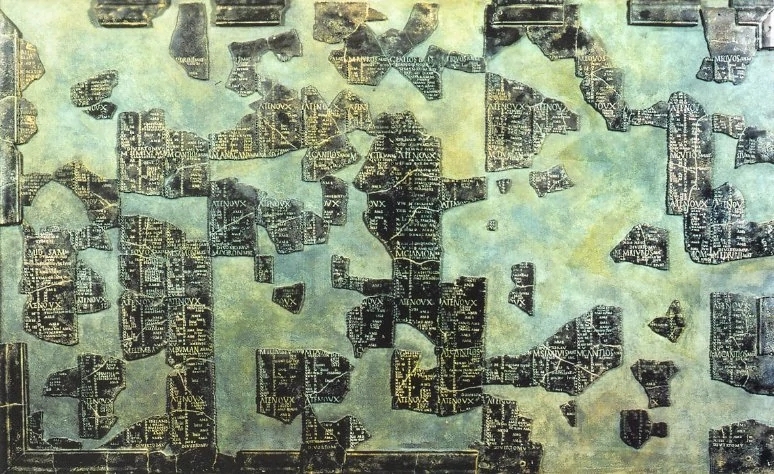
The Sequanni, or Coligny Calendar (used interchangeably) is a parapegma, that is, a bronze calendar with peg holes in it that marked each day. It was discovered in 1897 in Coligny, Ain, France. It is thought to date to the 2nd century CE. Almost everything about the calendar is hotly debated. Some theories are more popular than others, and perhaps we will never all agree. However, there are some context clues from what little can be reasonably assumed about the calendar, and a workable model will be presented.
With that said, let’s explore a little on the matters of timekeeping that we know. Caesar mentions that the Gaulish people considered the day to start at sundown. This isn’t really unusual, the Jewish people reckon the same with their own calendar, for example. Thus the reason their sabbaths start on Friday night. Considering that where they lived at the time of the Gauls were some distance away from the Gauls, starting the day at sundown was not at all uncommon in the ancient world.
Caesar didn’t likely gain anything from making mention of this, and so it is likely a truthful observation. The history of issues (to put it lightly) between Gauls and Romans were certainly not because of their differing approaches to calendars. With that said, we can safely wager that the day begins at sunset.
All the Gauls assert that they are descended from the god Dis, and say that this tradition has been handed down by the Druids. For that reason they compute the divisions of every season, not by the number of days, but of nights; they keep birthdays and the beginnings of months and years in such an order that the day follows the night.
Julius Caesar in The Gallic Wars states (Caesar, DBG 6.18)
We also have a mention of timekeeping in Gaul by Pliny the Elder.
The mistletoe, however, is but rarely found upon the robur; and when found, is gathered with rites replete with religious awe. This is done more particularly on the fifth day of the moon, the day which is the beginning of their months and years, as also of their ages, which, with them, are but thirty years. This day they select because the moon, though not yet in the middle of her course, has already considerable power and influence; and they call her by a name which signifies, in their language, the all-healing.
Pliny Natural History 16.95
Over The Moons
The months have either 30 or 29 days. 30 day months are noted Matis (MAT), the 29 day months Anmatis (ANM). In this respect, we cannot help but notice that the Attic Calendar, used by ancient Athenians, marks months as “full and “hollow”. It is worth noting that Greek culture was prestigious to the Gauls, especially before their fall to the Romans. Sequanni territory was not very far from the Greek colony of Massalia, and it wouldn’t be surprising if the Greeks had some influence on the Sequanni Calendar. This isn’t to say that the ancient Gauls weren’t already using a lunisolar calendar as it were. Which the Sequanni Calendar certainly is.
A lunisolar calendar attempts to reconcile the lunar months with the solar year. This is a relatively old style of timekeeping. Though purely lunar calendars like the Islamic Calendar do exist. Then, of course, the modern calendar, which gets its start in Rome, who weren’t about lunar months, apparently. They were more interested in the solar year. Now, back to Gaul, where the Sun and Moon must agree, at least somewhat. Most of the time, the Sequanni Calendar has twelve months, the first and third year in a five year cycle have thirteen. The first month is Samonios, something that is not debated.
The months start at the first quarter moon. This is an easy moon phase to spot, and it accents the binary fortnight division explained earlier. This centers the full and new moons in each fortnight, half month.
We offer “Are Ambicatû”, or “Before Ambicatus” as a term to date any years before the reign of Ambicatus, a legendary king. After those years, “Sepans Ambicatû” or “Following Ambicatus”. As opposed to BCE and CE or BC and AD. The app we use (from Ucetion Ammandelgaunon) provides the current year, which is year 11, as we start the year with Helen’s work which began in 2015. This work (from Helen Mckay) helps with notations.
The Months
At the most basic, and we’ll get to intercalary months in a minute, the months are as such, with rough Gregorian equivalents:
Coligny Month
Gregorian Approx.
Days
Notes
Samonios
May–June
30
First month
Dumannios
June–July
29
–
Riuros
July–August
30
–
Anagantios
August–September
29
–
Ogronios
September–October
30
–
Cutios
October–November
29
–
Giamonios
November–December
30
“Winter” month
Simiuisonna
December–January
29
–
Equos
January–February
29–30
Alternates to maintain lunisolar alignment
Elembiuos
February–March
30
–
Edrinios
March–April
29
–
Cantlos
April–May
30
–
These are your basic twelve months in order. So, what about those intercalary months? We are less certain. Quimonios (the end of the first segment of the calendar as “QVIMON”) and Rantaranos (the “r” is speculative, but “ANTARAN” is read from the fifth line of the 32nd month) are the two intercalary months inserted to even out a five year cycle. Before Samonios and Giamonios respectively.
It’s hard to say what many of the months mean. The foundation of most versions is what they believe the month of Samonios means. Whether it means “summer” or the end of summer. The latter of which is what leads some to believe Samonios is cognate to Samhain. Some believe Samonios means something like “assembly, gathering”.
However, the frame of reference we use to build a conclusion is not Samonios, but Giamonios. Which has less controversy around it, and is agreed upon to mean something related to “winter”. To our knowledge, no one claims it means “winter’s end”. A poor choice then for a summer month. Buttressed by the infix -on- that is seen in many deity names taken to mean “great, divine”.
Therefore, here the calendar starts in the summer. This is not unheard of, as the Attic Calendar, one of many in Ancient Greece, also started in the summer. The Greeks being a big influence on the Gauls makes this essentially unsurprising.
Usage
As stated before, the month starts at the first quarter moon. This means the third denotes the halfway point of the month. We see on the calendar “ATENOUX”, meaning “renewal, return”. Also, appearing in a half circle, like the first quarter fits the binary division of the month. “Light” and “Dark” halves.
Matis months have 30 days. Anmatis months have 29 days. The first half month is always 15 days, the second is either 15 or 14 days. The month of Equos alternates in days. Can be 30 or 29. This is of course an attempt to keep the calendar in a lunisolar harmony.
The Coligny Calendar operates in 5 year cycles. This is regardless of the 25, 30, or proposed 19 year Metonic cycle. The last only differs in that one intercalary year is dropped in the last 5 year cycle, taking it down to 4 years.
Why use a Metonic model? This is because changes were already thought to have been made to the calendar. The Coligny Calendar could well have been one. It would have taken very little effort to make one from where the calendar during its time of use. A Metonic cycle is an extremely accurate model that works perpetually. In other words, it’s an attempt to save future generations the trouble of having to make changes to one of the other models. This will make tracking and cataloguing history easier. Making this not only a liturgical, but practical option. A full, all purpose calendar. This also allows for history to be recorded.
Year 1 has the month Quimonios starting the year, then the normal 12 months. Year 3 has Rantaranos before Giamonios, thus the 7th of 13 months in that year. The second, fourth and fifth year are 12 month years. This 5 year cycle happens three times. The fourth time, Year 1 is dropped, making it a grand cycle of 19 years, then the calendar starts over again. Every 61 years, one day is dropped from Equos on the 5th year. If someone had a replica plaque, they’d never have to change it. They’d simply cover up the first year of the fourth cycle.
At the date of writing, (11 December, 2019), we are in the month of Giamonios. It started on 4 December. This means you can use the normal 12 months until then to know what months come next.
Check out our Calendar app, which was created by Ucetion Ammandelgaunon. A big thank you to them for creating this for us.
Check the day, and don’t forget to keep an eye on the moon!
Choose a place in which to do Dugiion, that is worship in your home. If you live in a fancy and/or very rustic establishment, you might already have something like a hearth. Odds are, you don’t. In that case, simply use a good surface as an Uentâ, or place of offering/sacrifice. This place will be the focal point of your Tegobessus (House Custom).
Place relevant stuff on it. At minimum, a candle and a bowl. Images or symbols of Dêuoi are all the better! Added dishes for offerings are fine too. Optimally, you’ll want this to face Ari (East). If not Ari, then try Dexouâ (South). If it has to face Eri (West) or Tutos (North), so be it. While East is optimal, something is better than nothing.
Now, what to put upon this Uentâ? At bare minimum you’ll need a Cumbâ (Bowl, also means “valley”, but is not pertinent to this) and a Dagilâ (candle). Whether or not it’s electric isn’t a big deal. But these are the bare minimums. The Cumbâ to hold the Addatus (offering), the Dagilâ for the Aidû (flame), of course.
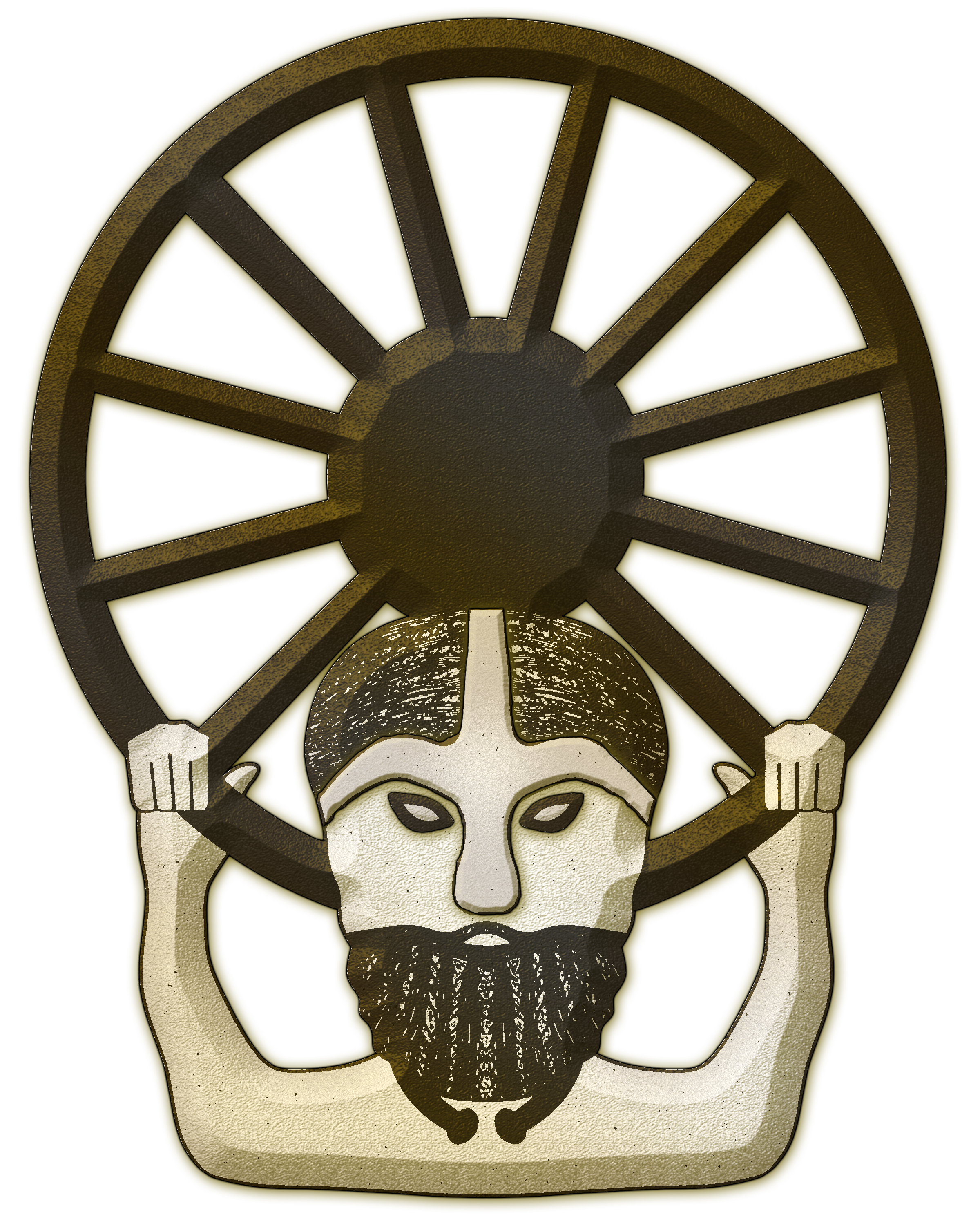
Of course, many will want to add Deluâs (images) of various Dêuoi (Worshipped Beings). Or symbols: A Rotos (wheel) for Taranis, an Epos (horse) related symbol for Eponâ, and so on. These certainly add character and help focus attention in a ritual on the deuos in question.
We have the why and how. Now for the when:
Planning rites are essential. Try to do them on a regular basis. The point is not to be perfect but to make an attempt at regularity. Do your best, but don’t beat yourself up over not being perfect. Just make it a goal to do the rites on a regular basis. This will allow for a rhythm to your rituals.
There are plenty of intervals on which one might choose to do rites. They could be done daily, weekly, bi-monthly, but at minimum once a month. Another suggestion is moon phases.
One of the most important things to do before a Rite is that of Glanosâgon (Purification). That means making yourself clean and ritually pure. To do this, you may wish to bathe or shower before ritual. At the least it is important to wash the hands and face. As the Gauls were known for using soap, some kind of bar soap would be a nice continuation of that tradition.
Wash hands and say: Glanolamâs “Clean hands” Swipe your forehead and say: Glanobritus “Clean mind” Swipe down the face with both hands and say: Glananation “Clean soul” (This is based on the idea of the soul residing in the head.)
Purify the sacred space
One must purify the sacred space. To do this, we will invoke Nemetonâ. This is vital to establish your space or making a new one. We will use Juniper as this was used by the Senogalatis to clear away snakes and to help with bits from poisonous creatures. So we will use it to clear away any unwanted energies in our space. You will now need a Dagilâ (Candle) to represent Aidona.
Light your Juniper and walk around your area or make a motion around your area in a sunwise circle three times to represent the three realms of Drus (Albios, Bitus, and Dubnos). As you do this, say the below invocation.
We/I invoke Nemetonâ Lady of the Borders Guardian of the Sacred The Great Keeper You give sacredness to the offering space, and you protect against bad spirits We/I give offering and thanks to you Offering Request We/I ask that this place be made sacred Cheer to you Thanks to you We/I praise Nemetonâ It is done
Welcoming Aidona
Aidonâ is the name we give to the spirit of the fire; basically, the hearth personified. We are introducing Aidonâ into our space for the first time so this is a very important step for us.
After the invocation, say
Oibelumî/Oibelomos sinaidû Aidoniâs.
I/We light this flame of Aidonâ.
Say some words welcoming Aidonâ This is very personal and needs to come from you.
[Addatus – Offering] After the offering, take a few moments to kneel, bow, or sit and commune with the recipient(s)
In the age before this world, a mystery shrouds, Born in darkness, the universe unannounced. Then, in a blaze of light, creation unfurled, A tale of fire and water, the elements whirled.
From the mist emerged a cow and a bull, Majestic and strong, they stood tall. Bouindâ, the cow, fed on the vaporous haze, Her udders brimming with nourishing praise.
Uindotaruos, the bull, thrived on her milk divine, His brawn and might a force to enshrine. More mist nourished Bouindâ, life’s grand course, Uindotaruos sowed his seed with a powerful force.
Two children were born from this divine blend, Litauiâ, radiant and broad, her beauty did transcend. Dêiuos, strong and tall, born from breath’s embrace, Destined for greatness, with wisdom and grace.
Yet, Uindotaruos foresaw a fateful plight, His heart overflowed with love, despite. A sacrifice he’d make, for his newfound kin, His final offering, his life’s ultimate win.
When Dêiuos reached maturity, the task at hand, He fulfilled the plan, with courage’s command. He struck, he strangled, he took Uindotaruos’ breath, A solemn act, sealing their destinies’ breadth.
Uindotaruos’ head became the sun above, His tears sparkled, the stars to inspire love. Litauiâ took his blood, deep well she made, From Uindotaruos’ backbone, Drus was laid.
Seeds from Drus grew in the well’s embrace, Ungods, Cauaroi, giants took their place. Feeding on Uindotaruos’ flesh, they grew strong, Warriors fierce, with power they belonged.
Dêiuos and Litauiâ’s family grew, In union, they thrived, their love stayed true. Three brothers and Three sisters stood tall, leading the way, Kindness, strength, wisdom, their virtues array.
The Cauaroi despised this family anew, War raged on, a never-ending brew. With Uindotaruos’ flesh nearly spent, Hunger loomed, the children’s torment.
Litauiâ prepared a fortress with care, Yet, they couldn’t stay forever there. A sacrifice was required, a heavy toll, Bouindâ knew what fate would unroll.
Bouindâ offered herself, a heartrending choice, To shape the world, a sacrifice of voice. The brothers struck, with tears in their eyes, They shaped this world, a great enterprise.
From Bouindâ’s body, creation arose, Mountains, forests, rivers, all took repose. Her skull, cast high, adorned the night, Becoming the moon, a celestial sight.
Her blood formed the seas, in waves they danced, Her milk became rivers, through lands enhanced. From Bouindâ’s bones, majestic peaks grew, Her teeth turned to stones, strong and true.
Her hair became forests, where life would dwell, A wondrous tale, in nature’s spell. Life flourished, the universe unfurled, A gift of abundance, a magical world.
Under the watch of the first family’s might, Cauaroi and Dêuîs engage in a timeless fight. The three brothers and three sisters claimed their realms divine, Dumnos, Albios, and Bitus, each a sign.


 Bessus Nouiogalation